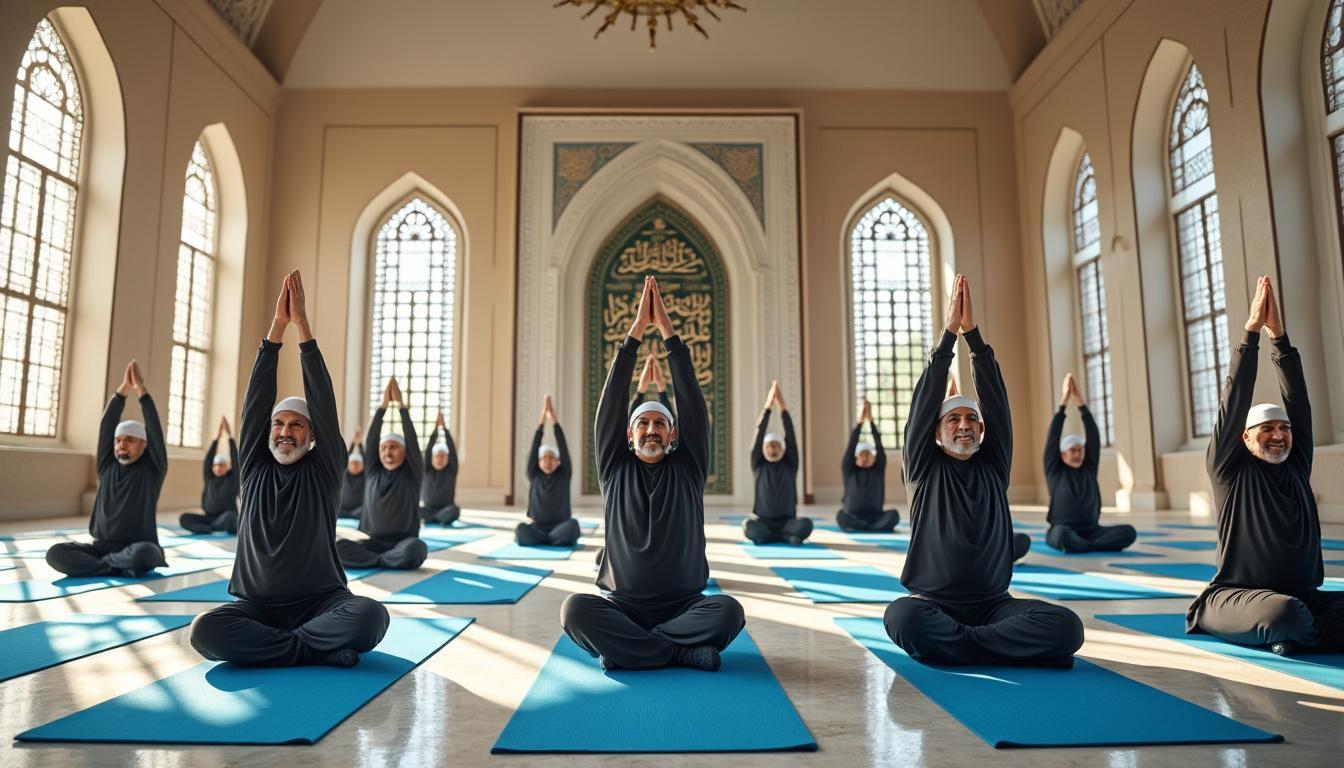
The Jamia Usmania mosque in Bradford now offers a weekly Pilates session immediately post-prayer, and the result looks like a small social revolution. A group of mostly retired men, aged between 50 and 80, move from midday prayer into a 45-minute routine of squats, glute bridges and gentle stretches. Instructor Zafar Kayani leads with humor and clear cues, mixing physical training with short breathing breaks that boost health and wellness. A short TikTok clip promoting the class went viral, drawing almost two million views, and interest arrived from mosques in the UK, Malaysia and Canada. Attendance rose from a handful to around 30 people per session, with organisers limiting numbers for space reasons. Participants report less joint pain, improved mobility after surgeries, and better mood through regular social interaction. The mosque plans to expand into women’s sessions and youth clubs, shifting its role toward a broader community hub. This initiative blends spiritual routine with practical fitness and social support, and it shows how simple local programs produce measurable public benefits. The story of Jamia Usmania offers a clear model for other places seeking stronger community ties and better public health.
The class began at three local mosques, with sessions offered straight after prayer to make participation easy. A short promotional video reached almost two million views, which sparked messages from faith leaders worldwide asking how to replicate the model.
The viral reach proved both a publicity boost and a planning challenge, as organisers adjusted for space and safety. The result is a scalable template for post-service programming in faith settings.
Key insight: accessible timing and familiar space remove barriers to regular exercise.
How sessions improve physical health and mental wellness
Sessions start with stretches, then progress to controlled movements suitable for varied abilities. Attendees report reduced aches after weeks of practice, improved walking ability, and fewer clinic visits.
One participant had a pacemaker and reported feeling stronger after joining. Another recovered mobility following double knee replacement, showing clear gains from consistent low-impact work.
These changes produce a ripple effect across the community, cutting demand for routine medical visits and lowering pressure on local services. Final insight: small, steady exercise yields durable benefits for older adults.
Community impact: fitness, camaraderie and reduced NHS load
The sessions deliver more than movement. Men gather, laugh, and build friendships that reduce loneliness. Organisers describe the group as a social platform which supports long-term attendance.
Public health data from recent years shows lower activity levels in some ethnic groups compared with the national average, which makes this local response relevant for broader policy. Instructors highlight fewer GP visits among regular attendees, suggesting fiscal and service benefits for the NHS.
- Physical gains: improved mobility and balance.
- Mental gains: reduced loneliness and better mood.
- Social gains: new friendships and a stronger local network.
- System gains: lower routine demand on health services.
Practical point: combining prayer time with exercise time increases uptake among older men.
Practical setup advice for other mosques and community centres
Start small with a 30 to 45-minute slot directly after a regular service. Use simple equipment and adaptive exercises to suit all abilities. Keep the tone light and use humour to build confidence among new participants.
Offer flexible dress rules to remove barriers, and recruit an instructor who understands local culture and language. Track attendance and basic outcomes, such as self-reported pain and mobility, to demonstrate impact to funders or local councils.
Resources: review core routines in the Best Pilates workouts guide and pair sessions with breathing tools from exercise for managing stress. Final tip: small monitoring steps build a case for expansion.
Scaling impact: making mosques into community wellness hubs
Leaders at Jamia Usmania describe a wider mission to host women’s classes and youth programmes, which extends the social reach of the mosque. The goal is a multiuse space which meets spiritual needs and everyday wellbeing needs.
Local partners such as councils or charities offer venue support and funding for outreach. Simple promotional clips on social platforms help recruit new members while preserving dignity and respect for participants.
Consider equipment choices carefully, for instance using light resistance or exploring weighted vest benefits for progressive strength work, or scheduling complementary options like hot yoga and pilates sessions for broader appeal. Final thought: gradual, culturally sensitive growth secures long-term participation.
Lessons from Bradford for your local project
Use established rhythms such as prayer times to anchor programming. Recruit familiar faces as ambassadors, and schedule simple evaluations to show results. Keep sessions low cost and highly accessible to attract steady attendance.
Engage women and youth with parallel offers, and coordinate with local health services to highlight preventive benefits. For inspiration on outreach and role models, review community fitness profiles like the Shweta Tiwari fitness profile.
Closing insight: culturally embedded programming increases trust and boosts long-term adherence.
Our opinion: Pilates post-prayer men’s classes in Bradford mosques
The Jamia Usmania example shows how a simple post-service Pilates slot builds fitness, fosters camaraderie, and strengthens local community. The model addresses physical limits and social isolation while offering measurable public value.
If you lead a community space, use familiar timing and modest resources to trial a class. Promote outcomes, share stories, and invite partners for steady expansion.
Final take: combining spiritual routine with accessible exercise creates a practical pathway to better health and stronger social ties.