
Many adults hit 60 without a clear map for staying strong and mobile. This guide gives simple, proven fitness tests you can perform at home to measure strength, endurance, balance, and flexibility. Maya, a 66 year old retired nurse, used these tests to rebuild her routine after a year of low activity. She tracked results, adjusted exercises, and regained confidence in daily tasks. The tests come from a public health kit used by professionals and match norms across age groups and genders. You will learn exact protocols, quick scoring tips, and how to turn results into a practical plan. These checks fit into one session and repeat through the year to show progress. Use the scores to tailor workouts or to share with your trainer or physician. This article teaches you step by step, with realistic examples and clear benchmarks. By following the steps you will measure real improvements in health and function. Final insight, measurable tests remove guesswork and keep you moving with purpose.
Fitness tests for adults over 60: what to try first
Start with tests that assess daily function. The three core checks below target muscle power, arm strength, and hamstring flexibility. Each test needs minimal equipment and a stopwatch.
These assessments reveal weak links that limit mobility and independence. Use them to set short term goals and to avoid common slips in performance with age.
Key insight, basic tests offer actionable data in under 10 minutes.
Sit to stand test, lower-body strength for seniors
This test measures leg power and transfer ability. Use a straight-back chair about 17 inches high and a stopwatch. Sit in the middle, feet shoulder width, hands crossed over the chest. Stand fully, then sit with control. Repeat for 30 seconds. Count each full stand as one rep.
Norms offer context: men aged 60–64 average 14–19 reps, women average 12–17. For ages 90–94 norms drop to 7–12 for men and 4–11 for women. Allow use of arms at first if needed, then reduce support as strength improves.
Practical tip, repeat the test every 8 to 12 weeks to track gains and adjust training.
Upper-body fitness tests for seniors: arm curl protocol
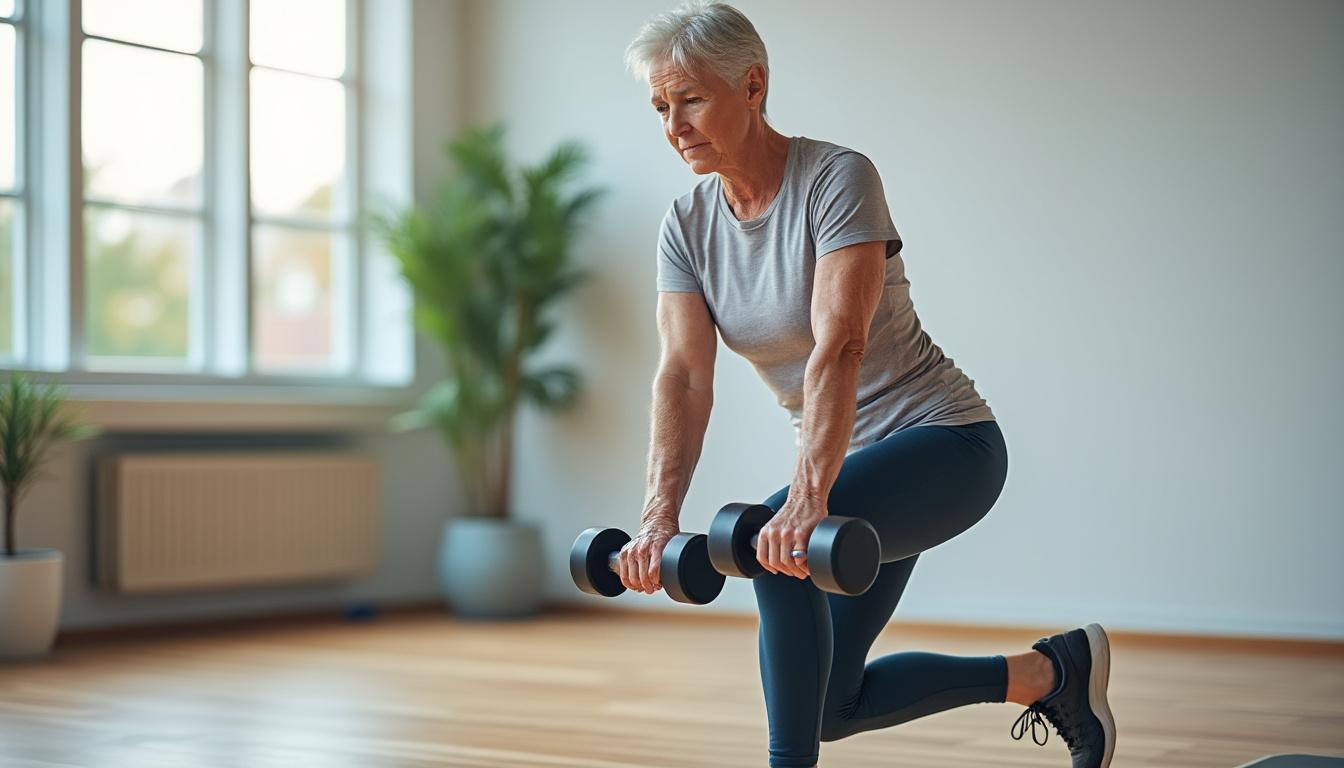
The arm curl measures functional upper-body strength for tasks like lifting groceries. Sit on a chair without armrests. Use a weight of 4 to 8 lb based on your level. Perform controlled curls with your dominant arm for 30 seconds. Count full reps.
Typical norms show men 60–64 at 16–22 reps, women at 13–19. Older age groups drop by roughly half the range. Focus on smooth motion through the full range and steady tempo for valid results.
Key insight, arm strength predicts independence in daily tasks and guides upper body programming.
Why these strength tests matter for your health
Strength declines with age in predictable patterns, yet targeted training reverses losses. Recent reports link age related strength decline to reduced activity and injury risk, forcing program adjustments for many adults. Use your scores to avoid generic plans and to target weak muscle groups.
For background reading on age and strength trends visit age related strength decline for analysis and coaching tips. Use findings to build a plan that blends resistance work and mobility drills.
Bottom line, strength scores guide safer, more effective workouts for long term health.
Mobility and flexibility tests for older adults: sit and reach
The sit and reach test shows hamstring length and forward reach ability. Sit on a chair placed against a wall for safety. One foot stays flat. Extend the other leg with heel on the floor. Keep the knee straight and foot flexed. Place hands one over the other and reach forward while keeping the back straight. Hold for 2 seconds.
Score the distance between fingertips and toes to the nearest half inch. A fingertip touch equals 0. Overlap yields a positive value; shortfall yields a negative value. Men aged 60–64 often score between -4 and -2.4 inches. Women average between -0.5 and 5 inches for the same age band.
Insight, mobility limits predict fall risk and constrain exercise options.
How to interpret results and set goals
Use a simple framework. If scores fall below norms, prioritize mobility and progressive strength work. If scores meet norms, maintain load and add balance drills. If scores exceed norms, use tests to push fitness safely with new targets.
Practical anchors include weekly strength sessions, short balance routines, and flexibility work after warming up. For sport specific ideas see Hyrox training adaptations for older athletes at Hyrox training for fitness.
Final thought, test results feed the plan and reduce guesswork in training for adults over 60.
Simple checklist to use your test results
- Record baseline scores for sit to stand, arm curls, and sit and reach.
- Set one short term goal per month, for example add 2 reps to the sit to stand.
- Assign two weekly strength sessions and two mobility sessions.
- Retest every 8 to 12 weeks and update goals.
- Share key scores with your trainer or physician when planning new programs.
Each step converts data into action and keeps progress measurable.
Our opinion
Our opinion is clear, regular testing empowers adults and seniors to protect mobility, independence, and long term health. Small, repeatable tests expose real weaknesses and show steady gains from targeted training. Use the tests described to build plans that fit your life and schedule. Track progress, adjust load, and include balance work to lower fall risk. If you want deeper reading on declining fitness and strategies to reverse losses visit declining fitness and strength. Share your results with peers and caregivers to keep motivation high.
Final insight, measured fitness yields measurable freedom in daily life.