

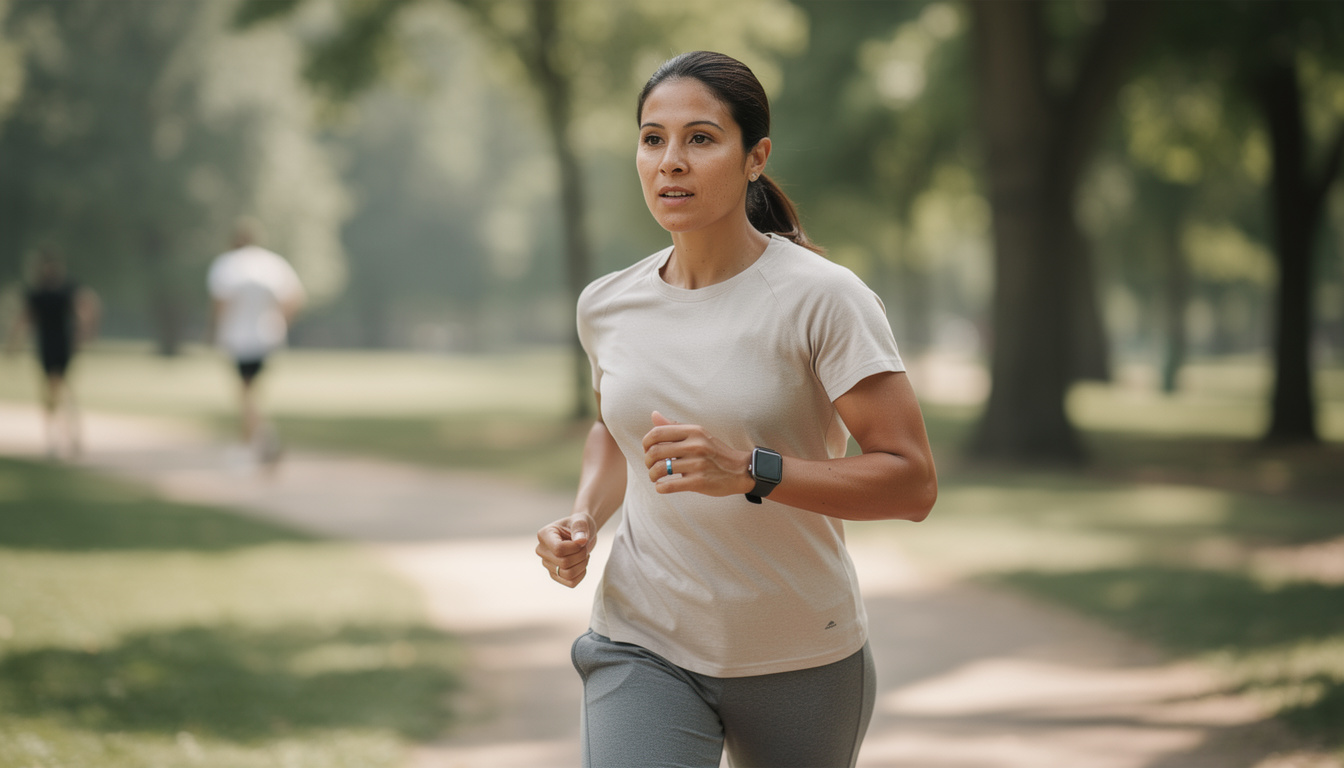
Wearing an Apple Watch and an Oura Ring at the same time looks a little excessive—until you realize they’re designed to solve different problems. One is a full-time wrist computer: it keeps you connected, nudges your daily movement, and nails workout tracking with a “start/stop” simplicity that fits real life. The other is a quiet health sensor you forget you’re wearing, then rewards you with sleep and recovery context that can change how you plan your week. Over the last few years, I’ve watched plenty of people buy the “wrong” wearable—not because the product was bad, but because the buyer expected it to behave like the other category.
To make this practical, we’ll follow a simple thread: imagine Jordan, a busy commuter who trains on an elliptical, walks a lot without thinking about it, and wants better sleep without turning bedtime into a tech project. Some days Jordan needs notifications and weather at a glance; other days Jordan only wants to know, “Am I recovered enough to push today?” That tension is exactly where the Apple Watch and Oura Ring separate—and where the right choice becomes obvious once you match the device to the job.
Oura Ring vs Apple Watch in 2026: how to choose the right wearable for your goals
The cleanest way to decide is to start with your primary goal. If you want a lifestyle device—messages, weather, timers, apps, and reliable exercise logging—the Apple Watch is built for that. If you want vitals and sleep with minimal friction and a discreet form factor, Oura is the specialist.
Jordan’s rule of thumb is simple: “If I need my wearable to talk back to me during the day, it’s the watch. If I need my wearable to teach me something overnight, it’s the ring.” That framing prevents the most common buyer’s remorse: expecting a ring to behave like a smartwatch, or expecting a watch to feel invisible at night.
Quick decision checklist: Apple Watch or Oura Ring?
If you want a fast filter, use this checklist before comparing specs. The goal is to align expectations with the device’s natural strengths, not to chase a “perfect” all-in-one that doesn’t exist.
- Pick Apple Watch if you want notifications, weather, messages, timers, and app integrations on your wrist.
- Pick Apple Watch if you train regularly and want dependable, on-the-spot workout tracking (runs, walks, swims, gym cardio).
- Pick Oura Ring if sleep quality and recovery signals are your main focus and you prefer a device you barely notice.
- Pick Oura Ring if you dislike wearing a watch overnight but still want consistent nighttime data.
- Pick both if you want a “coach” for training plus a “lab report” for sleep and readiness.
This is also a good moment to sanity-check your motivations: are you buying to improve habits—or to collect numbers? A thoughtful take on the limits of trackers can help set expectations, like this perspective on what fitness trackers get right (and wrong) about behavior.
Once you know your use case, the next step is comparing what you actually get for the money.
Apple Watch as a daily “do-it-all” wearable: workouts, apps, and real-life convenience
The Apple Watch wins when your day is messy and you still want structure. Jordan checks weather constantly—commute in the morning, quick glance before a lunchtime walk, another glance before an evening run. With a watch face complication, that’s one tap away, every time, without pulling out a phone.
App integration is the other quiet superpower. The “it just appears on my wrist” effect matters: start a timer in an app, get it on the watch immediately, and suddenly the wearable is saving attention rather than demanding it. That’s why, for many people, the Apple Watch becomes less of a gadget and more of a default interface for daily micro-decisions.
Workout tracking accuracy: where the Apple Watch typically feels effortless
For structured exercise, Apple’s strength is not only sensor quality but interaction design. When Jordan steps onto an elliptical, the watch reliably recognizes the movement pattern and logs it as a workout. On runs and walks, GPS-supported tracking tends to feel consistent, and swim sessions are handled with a level of polish that few wearables match.
The practical benefit is adherence: when logging is easy, you do it more often, and your trend lines become meaningful. That’s the real “accuracy” most people need—consistent data collected the same way, week after week.
If you’re shopping, it’s still worth doing a quick sweep of models to avoid poor-value picks and mismatched features; this roundup on smartwatches to avoid is a useful pre-check before you commit.
Apple also gives you range: premium Ultra models, mid-range Series models, and a budget SE line. Choice is great, but it can be confusing—so let’s contrast that with Oura’s simpler lineup next.
Oura Ring as a specialized health tool: sleep insights, comfort, and low-maintenance tracking
Oura’s big advantage is that it’s easy to wear all the time. Jordan’s ring looks like jewelry, not a medical device, so it fits work meetings, dinners, and bedtime without feeling like “gear.” That matters because the best health data is usually the data you can collect consistently.
Charging is also simpler in real life: for many users, it’s a roughly weekly routine rather than a daily habit. That lowers friction and makes the ring a dependable background sensor, especially for sleep and recovery trends.
Where Oura shines: sleep and recovery you actually act on
Oura tends to change behavior by making sleep feel measurable without being punitive. Jordan noticed the difference after late meals and alcohol: the next morning’s readiness and sleep insights made the trade-off obvious, without needing a lecture. Over time, that feedback loop helps you plan training intensity—push when you’re primed, pull back when recovery is lagging.
As a step counter, many people find it broadly comparable to a watch for daily movement totals, especially when worn consistently. Where it can feel weaker is workouts: without a screen, you’re not “in session” the same way, and auto-detected activities can require confirmation later. If your commute includes lots of walking, the ring may label chunks of the day as separate walk events, which can feel tedious even if the underlying movement data is fine.
The insight to keep: Oura is at its best when you treat it as a health context device, not a real-time fitness coach.
Apple Watch vs Oura Ring: price, subscriptions, and what you really pay for
Sticker price can look similar depending on the model, but the ownership experience diverges. Apple Watch pricing spans widely across tiers, while Oura’s feature set is largely consistent across finishes—paying extra tends to be about materials and aesthetics rather than locked capabilities. That simplicity makes comparison shopping easier.
The important hidden line item is Oura’s membership. Without it, your deeper sleep and readiness insights are limited. In 2026, subscriptions are common across wellness tech, but it still changes the total cost of ownership—especially if you keep the ring for multiple years.
| Category | Apple Watch (Series/Ultra/SE) | Oura Ring (Ring 4 and similar) |
|---|---|---|
| Best for | All-day lifestyle + workouts + apps | Sleep, recovery, discreet health tracking |
| Workout experience | Strong real-time logging with on-screen metrics | More passive; auto-detected sessions may need confirmation |
| Sleep comfort | Some love it; others dislike sleeping with a watch | Typically easy to forget you’re wearing it |
| Charging rhythm | More frequent charging for most users | Often closer to a weekly charge pattern |
| Ongoing costs | No mandatory subscription for core health tracking | Membership required to unlock full insights |
| “Extra value” factor | Notifications, messaging, weather, timers, apps | Jewelry-like design and 24/7 background sensing |
If you’re also building a broader routine around training, it helps to think beyond the wearable—shoes, straps, heart-rate accessories, and comfort basics can improve consistency more than any metric. A curated guide to fitness workout gear that actually supports training can complement whichever device you pick.
Choosing “both” without wasting money: a practical two-device system
Jordan’s best weeks happen when each device has a clear job. The Apple Watch handles training sessions and daytime utility: workouts, quick weather checks, and the frictionless reminders that keep the day on track. The Oura Ring handles sleep and recovery context: it answers “How did last night affect today?” without needing a screen or a constant prompt.
The trick is avoiding duplicated effort. If you wear both, decide in advance which one is your “source of truth” for activity minutes and workouts (usually the watch) and which one you consult for readiness and sleep trends (the ring). When roles are clear, the combo stops feeling redundant and starts feeling like a simple system.
One final question to keep you honest: are you using the data to make a decision today—bedtime, caffeine timing, workout intensity—or are you just collecting it? The winner is the wearable that nudges you toward better choices you’ll repeat.