Sleep apnea in athletes is easy to miss because fitness doesn’t protect you from upper-airway obstruction. Loud snoring, witnessed breathing pauses, morning headaches, persistent fatigue, poor concentration, stalled recovery, and high blood pressure all justify medical follow-up. Muscular lifters with large necks may face added risk. A wearable can raise suspicion, but only a clinical sleep study can diagnose the condition.
What is obstructive sleep apnea?
Obstructive sleep apnea, or OSA, occurs when the upper airway repeatedly narrows or closes during sleep. Airflow falls or stops, oxygen may drop, and the brain briefly disrupts sleep to restore breathing. You may have no memory of those interruptions the next morning.
That makes OSA different from simply staying up too late. More time in bed won’t necessarily solve fragmented breathing, and weekend catch-up sleep can’t remove an airway obstruction. Our guide to recovering from accumulated sleep debt explains what extra sleep can address and where its limits begin.
Untreated sleep apnea is associated with hypertension and increased risk of heart attack and stroke. Those aren’t distant concerns reserved for sedentary people. Athletic status doesn’t cancel cardiovascular risk, particularly when high blood pressure or repeated nighttime oxygen disturbance is already present.
Sleep apnea in athletes: warning signs that deserve attention
Snoring by itself doesn’t establish a diagnosis. Loud, frequent snoring combined with gasping, choking, or breathing pauses witnessed by a partner is much more concerning. Daytime symptoms matter too, especially when you allow enough sleep opportunity but still feel unrefreshed.
| Warning sign | Why it matters | Practical next step |
|---|---|---|
| Loud, frequent snoring | Recognized 2025 OSA symptom | Record 7 nights of observations |
| Gasping or witnessed pauses | Repeated upper-airway blockage | Request a clinical sleep assessment |
| Morning headache | 33% pooled prevalence in a 2024 review | Track symptoms for 14 mornings |
| Daytime sleepiness despite 7–9 hours in bed | Possible sleep fragmentation | Discuss home testing or polysomnography |
| Poor concentration or slowed reactions | Impaired daytime functioning | Avoid driving when dangerously sleepy |
| High blood pressure | Established cardiovascular association | Obtain clinician-reviewed measurements |
The headache signal needs context. A 2024 systematic review and meta-analysis covering 23 studies and 15,402 patients estimated that morning headaches occurred in 33% of people with OSA, with a 95% confidence interval of 24% to 45%. Yet the analysis didn’t show a statistically clear increase in headache risk versus controls without OSA, so a headache is a clue, not a diagnostic shortcut.
Watch for changes inside the gym as well: unusually slow reactions, poor focus, and recovery that seems out of proportion to your program. These symptoms have many possible causes, including underfueling, excessive training stress, medication effects, and insufficient sleep. Their value comes from the pattern, particularly when nighttime breathing signs are present.
Why a powerful neck can still be a risk factor
A large neck can narrow the space available around the upper airway. MedlinePlus identified collar measurements of at least 17 inches, or 43 centimeters, in men and at least 16 inches, or 41 centimeters, in women as higher-risk markers in 2025. These are screening thresholds, not diagnostic cutoffs.
Football research illustrates the issue, although it doesn’t tell us the prevalence among all lifters. In a 2003 study of professional American-football players, offensive and defensive linemen represented 85% of identified sleep-disordered-breathing cases. Their mean neck circumference was 19.1 ± 0.9 inches, or 48.5 ± 2.3 centimeters.
The same 2003 investigation reported an estimated prevalence of 14% among 302 evaluable players and 34% in its high-risk group. Its polysomnography subgroup contained only 52 players and used an apnea-hypopnea index, or AHI, threshold of at least 10 events per hour. Selection and threshold choices limit how confidently those numbers can be transferred to recreational strength athletes.
Body mass matters, but position labels can mislead. A 2010 study of 257 retired NFL players found sleep-disordered breathing in 52.3%, including 61.3% of linemen and 46.6% of non-linemen. Lineman status was no longer predictive after adjustment for age and BMI, suggesting that body size and aging explained part of the apparent position effect.
Results in active players have been less dramatic. Among 137 active veteran NFL players studied in 2007 and reported in 2010, 19% had at least mild sleep-disordered breathing using a respiratory disturbance index of five or more events per hour; 4.4% reached 15 or more. Linemen and non-linemen didn’t differ significantly.
A 2017 study of 40 collegiate football players found sleep-disordered breathing in 22 players, or 55%, using a portable-test AHI threshold of at least five. Affected players were heavier, averaging 109 ± 20 kilograms versus 92 ± 14 kilograms, and were more often linemen. Small samples, different testing methods, and football-specific body types are major caveats.
What poor breathing can do to training and recovery
Repeated sleep disruption can leave you sleepy, inattentive, and slower to react. For an athlete, that may show up as missed cues, sloppy bar paths, reduced motivation, or a recovery score that stays low despite adequate time in bed. Research on athlete sleep more broadly associates disturbed sleep with poorer performance and recovery, but that doesn’t prove OSA caused every bad session.
Muscle repair also depends on sleep quality, not merely the number displayed by your alarm clock. The relationship between sleep and muscle growth includes hormonal, behavioral, and training-quality pathways. OSA-specific studies in lifters remain limited, so claims that treatment will add a predictable number of kilograms to your squat aren’t supported.
Honestly, this matters more than squeezing another percentage point from a recovery supplement. If breathing interruptions are fragmenting your sleep, changing pre-workout timing or adding an easy recovery session doesn’t address the cause. The cardiovascular association makes ignoring persistent symptoms a poor trade.
Get tested instead of guessing from an app
Diagnosis requires a sleep study. Depending on your symptoms and clinical circumstances, that may be an overnight polysomnography study in a sleep laboratory or a home sleep-apnea test ordered and interpreted through an appropriate healthcare pathway. A clinician can also assess blood pressure, anatomy, other sleep disorders, and alternative causes of fatigue.
A practical response looks like this:
- Ask a partner about snoring, gasping, and breathing pauses, or document observations across 7 nights.
- Measure your neck at collar level and treat the result as a risk marker, never a diagnosis.
- Record morning headaches, daytime sleepiness, blood-pressure readings, and training changes for 14 days.
- Bring that record to a physician or qualified sleep clinician and ask whether home testing or laboratory polysomnography fits your case.
- Seek prompt medical advice if sleepiness makes driving unsafe or breathing symptoms are severe.
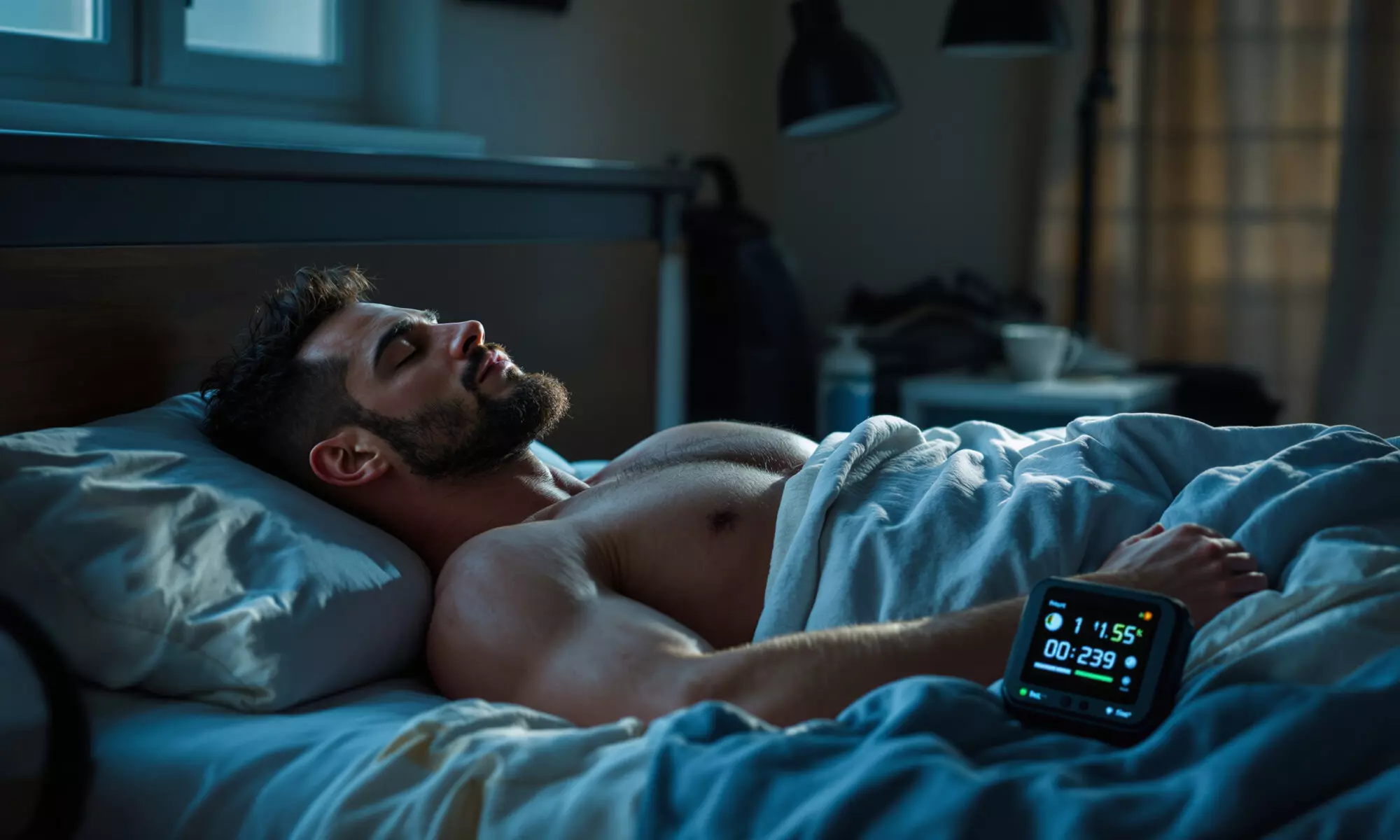
Consumer technology can be useful as an alarm bell. In July 2026, the FDA found Samsung’s Sleep Apnea Feature v2.0 substantially equivalent for assessing signs of moderate-to-severe sleep apnea from two nights of data in adults aged 18 and older. The FDA’s over-the-counter category explicitly says these devices aren’t standalone diagnostic tools and don’t replace polysomnography.
That distinction gets lost in recovery dashboards. Read our assessment of what wearable recovery scores get right and wrong before treating an overnight metric as a medical verdict. A reassuring score shouldn’t overrule witnessed breathing pauses, marked sleepiness, or hypertension.
Treatment is medical, but the options are practical
Positive airway pressure, commonly called PAP or CPAP, is the most common treatment for OSA. It uses pressurized air to help keep the airway open during sleep. Proper mask selection, pressure settings, and follow-up matter because a machine can’t help when discomfort leaves it unused.
A prescribed oral appliance may be considered when someone doesn’t want or cannot tolerate CPAP. Healthy-weight management is also among recommended measures, where appropriate, but “lose weight” is an incomplete answer for a muscular athlete and shouldn’t delay testing. Anatomy, neck dimensions, age, body composition, and other clinical factors can all contribute.
What would I do in practice? If you have repeated gasping or witnessed pauses plus daytime symptoms, I’d prioritize a clinical assessment over another training-program adjustment. If you already have diagnosed hypertension, cardiovascular disease, or severe daytime sleepiness, involve a qualified medical professional rather than trying to troubleshoot the problem alone.
Frequently asked questions
Can fit athletes have sleep apnea?
Yes. Low body fat and regular training don’t eliminate OSA risk. Upper-airway anatomy, neck circumference, age, body size, and other factors still matter.
Does a thick neck mean I have sleep apnea?
No. A neck circumference of at least 17 inches in men or 16 inches in women is a recognized higher-risk marker, not a diagnosis. Confirmation requires a clinical sleep study.
Can a smartwatch diagnose sleep apnea?
No. FDA-authorized features can assess signs or flag risk in eligible users, but they aren’t standalone diagnostic tools and cannot replace home sleep-apnea testing or polysomnography.
Is snoring always a sign of sleep apnea?
No. Snoring can occur without OSA, but loud frequent snoring accompanied by gasping, witnessed pauses, daytime sleepiness, or high blood pressure deserves assessment.
Will treating sleep apnea improve athletic performance?
Treatment addresses disordered breathing and sleep disruption, but athlete-specific evidence doesn’t support a guaranteed performance increase. Better daytime function and recovery may follow when OSA is effectively treated, with individual responses differing.