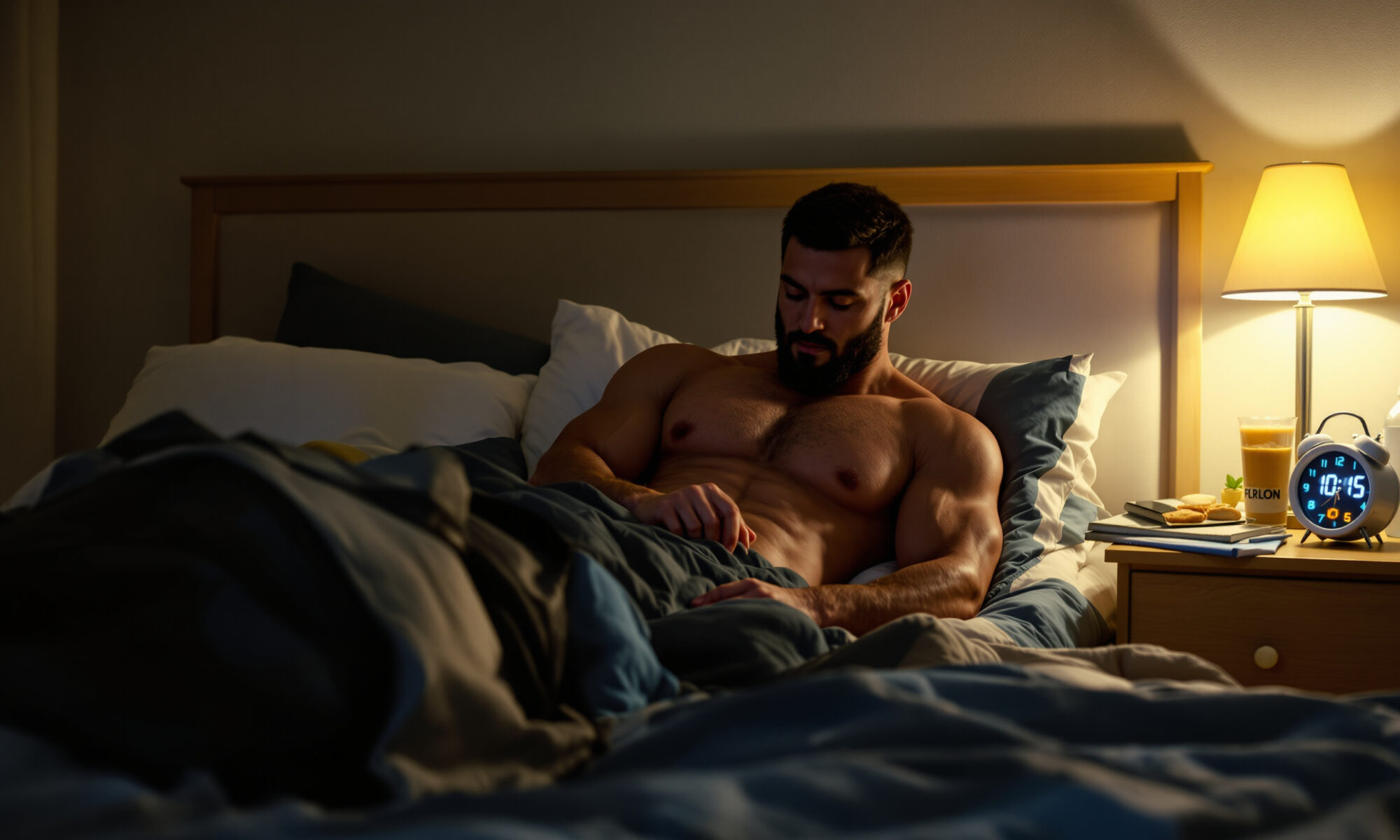
Sleep and muscle growth are connected, but sleep is not a magic anabolic hack. The best reading of the evidence is simpler: if you sleep well enough, you recover better, train harder, regulate appetite better, and are less likely to lose lean mass when calories are low. That matters. The popular claim that a nighttime growth hormone spike alone builds muscle is overstated.
Sleep and muscle growth: what the research actually supports
Start with the practical answer. If you lift regularly, sleeping around 7 to 9 hours per night is the boring, high-value target for most adults, with some athletes doing better closer to 8 to 10 hours when training volume is high. Honestly, this only matters if you’re already training hard enough and eating enough protein to give sleep something to recover from.
What the research shows is mostly indirect, but still meaningful. Sleep supports recovery processes, motor learning, mood, reaction time, and training readiness. It also affects hormonal patterns, including growth hormone, testosterone, cortisol, and appetite hormones, yet single-hormone explanations usually oversimplify what actually drives hypertrophy over weeks and months.
If you treat recovery like an afterthought, read our piece on why recovery works better as a repeatable health habit. That frame fits this topic perfectly.
Does growth hormone during sleep build muscle?
Partly, but not in the way social media usually sells it. Growth hormone secretion rises in pulses, and one of the largest pulses tends to occur soon after sleep onset, especially during early slow-wave sleep. That link has been known for decades.
Here’s the caveat competitors often skip: a transient growth hormone pulse is not the same thing as measurable muscle gain. In adults, growth hormone appears more tightly tied to tissue repair, collagen turnover, and substrate use than to large direct increases in muscle protein synthesis from normal sleep alone. Resistance-trained people do not add visible muscle just because one night’s growth hormone pulse was higher.
So yes, sleep supports an anabolic environment. No, you should not think of sleep as a legal growth hormone trick. Muscle growth still depends mainly on training tension, total work, sufficient energy, and protein intake spread sensibly across the day. If that last point is fuzzy for you, our guide on protein per meal and muscle protein synthesis covers the practical numbers.
Where sleep loss hits hardest
Acute sleep loss can hurt performance fast. A rough night or two may reduce motivation, bar speed, coordination, and perceived effort tolerance even before you notice obvious strength loss on paper. That’s a big deal because training quality is the real bridge between sleep and muscle growth.
Longer sleep restriction looks worse. Research in athletes and active adults has repeatedly linked shorter sleep with poorer recovery, slower reaction time, reduced sprint output, and greater fatigue. In lifters, that usually shows up as lower-quality sessions rather than some dramatic overnight drop in one-rep max strength.
One overlooked edge case is dieting. A 2010 randomized crossover study by Nedeltcheva and colleagues found that during calorie restriction, participants sleeping 5.5 hours per night lost less fat and more lean mass than when they slept 8.5 hours. The sample was small and not made up of trained lifters, so don’t overread it, but the direction matters: under-sleeping while cutting seems especially unhelpful if you care about muscle retention.
| Sleep condition | Concrete number | What evidence suggests | Best use in practice |
|---|---|---|---|
| Restricted sleep during a diet | 5.5 h/night in a 2010 study | Less fat loss and more lean-mass loss than 8.5 h/night | Avoid during cuts if muscle retention matters |
| Better sleep during a diet | 8.5 h/night in the same 2010 study | More favorable body-composition change under calorie restriction | Good target when calories are low |
| General adult target | 7-9 h/night from 2015 AASM/SRS guidance | Supports health, recovery, and day-to-day performance | Default range for most lifters |
| Heavy training phases | 8-10 h/night used in many athlete recommendations | May improve recovery, alertness, and training quality | Useful during high volume, two-a-days, or hard sport blocks |
Quality matters, not just hours
You can’t completely brute-force bad sleep with a longer time in bed. Fragmented sleep, late-night alcohol, large shifts in bedtime, heavy caffeine late in the day, and bright light exposure at the wrong time can all cut into sleep continuity and slow-wave sleep, which is where that early-night growth hormone pulse is most prominent.
This is also where wearables can mislead you. Devices can be decent at estimating sleep duration trends, but sleep stage data and recovery scores are not precise enough to overrule how you actually feel and perform. Our breakdown of what wearables get right and wrong about recovery scores is worth reading before you let an app talk you out of training.
What I’d do in practice is chase consistency before optimization. Go to bed and wake up within roughly the same 60-minute window, protect the last hour before bed from bright screens and work spillover, and keep your room dark, quiet, and cool enough that you stay asleep.
Can more sleep increase muscle growth directly?
Maybe a little, mostly through better training and better decision-making. Sleep extension studies in athletes, especially in team-sport settings, often show improvements in reaction time, sprint performance, free-throw accuracy, or subjective recovery after sleep is increased. That’s useful, but it’s not the same as a hypertrophy trial proving that extra sleep alone adds a specific amount of muscle in trained lifters.
That distinction matters. Mechanistically, poor sleep can impair glucose handling, raise perceived stress, and make it harder to hit quality volume. Outcome data on long-term muscle gain from extending sleep are still thinner than many headlines imply.
A myth worth retiring: if you sleep 10 hours, you do not automatically outgrow the person sleeping 8 hours. Past a certain point, more time in bed is not necessarily more recovery, and long sleep can sometimes reflect illness, accumulated fatigue, or poor sleep quality rather than superior habits.
How to use sleep to protect recovery and gains
If your schedule is messy, keep this simple. Start with the biggest return-on-effort habits rather than buying gadgets or obsessing over sleep stages.
- Set a minimum sleep floor of 7 hours in bed, and aim for 7.5 to 9 hours on most nights.
- During hard training blocks or calorie deficits, push closer to 8 to 9 hours when possible.
- Keep caffeine at least 8 hours away from bedtime if you’re sensitive to it.
- Eat enough total protein across the day, not just a giant dinner after training.
- Lower training volume slightly after several poor nights instead of forcing all-out failure work.
That last point is one many lifters ignore. If sleep has been bad for three or four nights, I’d usually keep intensity honest but trim junk volume and avoid repeated grinders. There’s a reason our article on training to failure and long-term progress argues that all-out efforts are a tool, not a default setting.
For busy adults, this also argues for a program you can recover from. A realistic structure like a three-day full-body strength plan often outperforms an ambitious five-day split that constantly collides with short sleep and work stress.
If you snore heavily, wake gasping, or feel unrefreshingly tired despite spending 8 or 9 hours in bed, get checked by a qualified clinician. Sleep apnea and other disorders can wreck recovery, blood pressure, and training output, and they don’t care how disciplined you are in the gym.
FAQ
Can you build muscle on 6 hours of sleep?
Yes, some people still can, especially for short periods. But the evidence and real-world coaching experience both suggest that 6 hours makes recovery, appetite control, and training quality less reliable, which raises the odds that progress slows.
Is growth hormone during sleep the main reason sleep helps muscle growth?
No. Growth hormone is part of the story, but sleep likely helps muscle growth more through whole-system recovery: better training performance, better tissue repair, better energy regulation, and less disruption to appetite and stress signals.
Does napping help if your nighttime sleep is short?
It can help alertness and reduce fatigue, especially after a bad night. A nap is still not a full replacement for regular nighttime sleep, and it won’t fully erase the recovery cost of chronic sleep restriction.
How much sleep should lifters aim for when cutting?
A good practical target is 8 to 9 hours if you can manage it. The limited evidence we have, including the 2010 calorie-restriction study, suggests sleep becomes even more valuable when you’re trying to keep lean mass while eating less.
Do sleep supplements improve muscle growth?
There is no good case that common sleep supplements directly build muscle. Some may help certain people fall asleep, but at this dose, the evidence just isn’t there for a meaningful hypertrophy effect independent of better sleep itself.