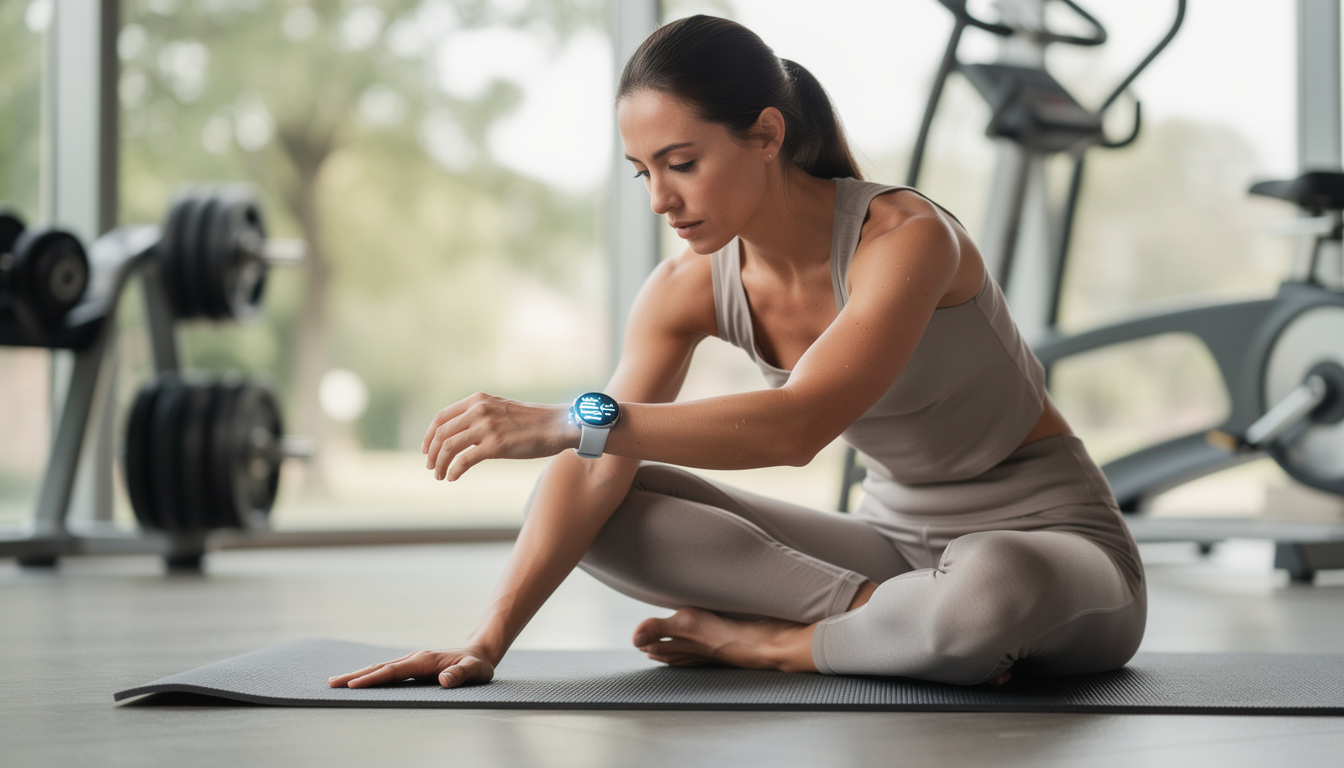
Sleep rings, wrist trackers, and readiness dashboards now shape morning decisions for millions of people. A score flashes on a screen, and suddenly your workout, mood, and confidence can shift before breakfast. The appeal is obvious. Recovery used to feel subjective. Wearables promise to turn it into a number.
The promise is useful, but incomplete. Devices can catch patterns in HRV, resting heart rate, sleep duration, respiratory rate, and recent training load. They can also flatten a messy human reality into a neat verdict that sounds more certain than it is. This matters because a recovery score can improve pacing and recovery habits, or quietly erode body awareness when you let it overrule lived experience.
How Recovery Scores Work on Wearables
Most recovery platforms build a daily score from a small set of physiological signals. HRV usually carries the most weight, because it reflects variation between heartbeats and gives a rough window into autonomic nervous system balance. A higher reading, relative to your own norm, often aligns with better recovery. A lower reading can follow hard training, poor sleep, travel, alcohol, illness, dehydration, or psychological stress.
Resting heart rate adds another layer. If your overnight or morning resting heart rate rises above baseline, the device may interpret that as strain. Sleep also matters, especially duration and consistency. Consumer devices still vary in sleep stage accuracy, but they are usually better at spotting broad changes in total sleep time and bedtime patterns than exact REM or deep sleep totals.
Most algorithms also blend in recent exercise load, movement trends, skin temperature, and sometimes respiratory rate. That is why one brand’s “ready” can differ sharply from another brand’s “take it easy.” The device is not measuring recovery directly. It is estimating recovery through a proprietary model.
That distinction explains why skepticism is healthy. At Fitness Warrior Nation, we have seen the same tension in coverage of practical Apple Watch training habits and broader fitness gadget motivation trends. The data can help. The interpretation can mislead.
What Devices Usually Measure Well
Heart rate trends are generally solid during rest and steady aerobic work. Sleep duration is also reasonably useful for trend tracking, even if sleep stages remain imperfect. Step counts and broad activity load estimates are usually good enough for everyday training context.
HRV is more complicated. A morning HRV trend can be valuable when the device measures it consistently, under similar conditions, over time. The important comparison is not your friend’s number or a social media screenshot. Your baseline matters far more than population averages. A normal HRV range for one person can look low or high for another.
What Devices Often Overstate
The problem starts when a mixed dataset becomes a single verdict. A score of 32 or 78 feels precise, but the math behind it is hidden. A 2024 paper in Translational Exercise Biomedicine examined composite health scores from major wearable brands and raised a familiar issue: individual signals may have value, while the final summary score can obscure uncertainty and oversimplify context.
This is where many users drift from helpful monitoring into misplaced obedience. You wake up feeling fine, see a bad score, and decide you are exhausted. Or you feel run down, see green, and push anyway. Both mistakes happen because the score looks more authoritative than it really is.
Where Wearables Get Recovery Right
The best use of wearable data is trend detection. Humans miss patterns. Devices do not, at least not the obvious ones. If your overnight heart rate rises after alcohol, if late-night intervals hurt sleep quality, or if a hard training block drags HRV down for several days, a wearable can make that visible fast.
That makes recovery scores helpful for behavior change. They often reinforce a simple point many active adults resist: rest has a training function. Recovery is not a gap between workouts. It is where adaptation happens. A low score after multiple high-load days can be a useful cue to reduce intensity, extend warm-up time, or swap intervals for Zone 2 work.
These tools also catch “invisible load.” Work stress, long flights, poor fueling, illness onset, and fragmented sleep can all affect the same signals that training affects. In that sense, a recovery score can protect you from treating every tough day like a motivation problem. Sometimes the issue is not discipline. It is accumulated stress.
| Metric | What It Can Tell You | Main Limitation |
|---|---|---|
| HRV | Recovery trend, autonomic stress, response to training | Highly individual, sensitive to stress, alcohol, illness, and measurement conditions |
| Resting Heart Rate | Possible strain, illness, fatigue, or poor recovery | Can rise from heat, dehydration, travel, anxiety, or hormonal shifts |
| Sleep Duration | Useful trend on time asleep and schedule consistency | Sleep stages remain less reliable than total duration |
| Temperature Trend | Possible illness, cycle-related shift, or environmental stress | Does not explain the cause of the change |
| Training Load | Recent strain relative to prior activity | Does not capture emotional stress or under-fueling well |
For athletes and regular exercisers, that broad view matters. It also pairs well with evidence-based planning. If you want the habit side of that equation, our coverage of science-backed fitness habits and data-aware training techniques makes the same point from a different angle: metrics help most when they sit inside a sound routine.
Where Wearables Get Recovery Wrong
The biggest failure is false certainty. A consumer wearable cannot diagnose overtraining, depression, iron deficiency, sleep apnea, viral illness, or RED-S from one readiness score. It can flag a possible shift. That is useful. It cannot tell you why the shift happened.
There is also a psychological cost to over-tracking. Sleep researchers have discussed orthosomnia, a pattern where pursuit of perfect sleep data creates anxiety around sleep itself. Recovery scores can produce a similar loop. A bad score becomes a story. The story changes your perception. Then the day starts with stress that the device helped create.
Another blind spot is neurological fatigue. Most consumer devices do not include reaction time in recovery scoring, even though slowed reaction time can reveal cumulative fatigue in sport settings. Many athletes notice this before they notice an obvious cardio drop. They feel flat, slightly off, or less coordinated. The body often registers fatigue in ways the dashboard does not summarize.
Hormones, Cycle Phase, and Perimenopause Change the Picture
This is one of the most overlooked limits. Hormonal state directly affects HRV, resting heart rate, temperature, and sleep. During the follicular phase of the menstrual cycle, many women see relatively higher HRV and lower resting heart rate. During the luteal phase, progesterone rises, body temperature increases slightly, HRV may drop, and resting heart rate can climb by about 3 to 10 bpm.
A wearable may label that pattern “poor recovery,” even when it reflects normal physiology. The issue can become more pronounced in perimenopause, where hormonal shifts are less predictable and sleep disruption is common. If your baseline changes, the app may keep sending warning signals that feel personal but are actually contextual.
Low scores are not always evidence of doing recovery badly. Sometimes they reflect a different physiological setting. That matters, especially if you are adjusting training while navigating hot flashes, night waking, cycle shifts, or mood changes. If you have a history of hormonal or cardiac issues, talk to a qualified clinician before making major training changes from wearable data alone.
How to Use Recovery Scores Without Letting Them Run Your Day
The practical move is simple. Check your body before you check your app. Ask a few basic questions first. How did you sleep? How sore are you? How is your mood? Do you feel flat, wired, normal, or sick? Then compare that internal read with the device output.
If both line up, great. You have confirmation. If they clash, stay curious instead of obedient. One mismatch does not mean your body is wrong or the device is useless. It means context needs work.
- Look at 7-day and 28-day trends, not just today’s color or score.
- Match the score to the decision. A light walk needs less scrutiny than max intervals or a heavy squat day.
- Log context like alcohol, travel, illness, menstrual cycle phase, and unusually stressful work periods.
- Use hard, medium, and easy options in your weekly plan so you can adjust without derailing training.
- Trust symptoms over green lights. If you feel ill, dizzy, or unusually breathless, skip the algorithm and seek medical guidance.
This is also where the phrase natural density deserves a better use than most wellness marketing gives it. In practice, natural density is the real-world weight of your day: sleep debt, stress, hormonal context, social life, travel, and training load layered together. A recovery score that ignores that natural density will sound smart and still miss the point.
Natural density also explains why two identical workouts can feel different on different days. Your biology does not arrive empty. It arrives with momentum. That same natural density shapes how useful a score will be. A good dashboard can hint at it. Only your lived context can fully define it.
Quick Takeaways on Wearable Recovery Scores
Use recovery scores as signals, not orders.
Trend lines matter more than single mornings.
HRV and resting heart rate are personal metrics, not public rankings.
Hormones, illness, stress, and under-fueling can all lower scores without meaning you are failing.
Natural density beats algorithm confidence every time.
Questions People Ask About Recovery Scores
Are wearable recovery scores accurate enough to plan training?
They are useful for broad planning, especially if you review trends over one to four weeks. They become more helpful when paired with session RPE, workout performance, and notes on sleep, stress, and fueling rather than used as a stand-alone decision tool.
Why is my HRV low even when I did not train hard?
Low HRV can follow alcohol, dehydration, travel, illness onset, a hot sleep environment, psychological stress, or menstrual cycle changes. A late meal, poor sleep timing, or even inconsistent sensor placement can also affect the reading.
Should I skip a workout because my recovery score is low?
It depends on the workout and on how you feel. A low score may justify reducing intensity on heavy lifting, HIIT, or long endurance work, but easy walking, mobility, or technique work may still fit the day well.
Can recovery scores help spot illness early?
Sometimes, yes. A combination of elevated resting heart rate, lower HRV, higher temperature trend, and unusual fatigue can appear before you feel clearly sick, but those changes are not specific enough to identify the cause without symptoms or medical evaluation.