

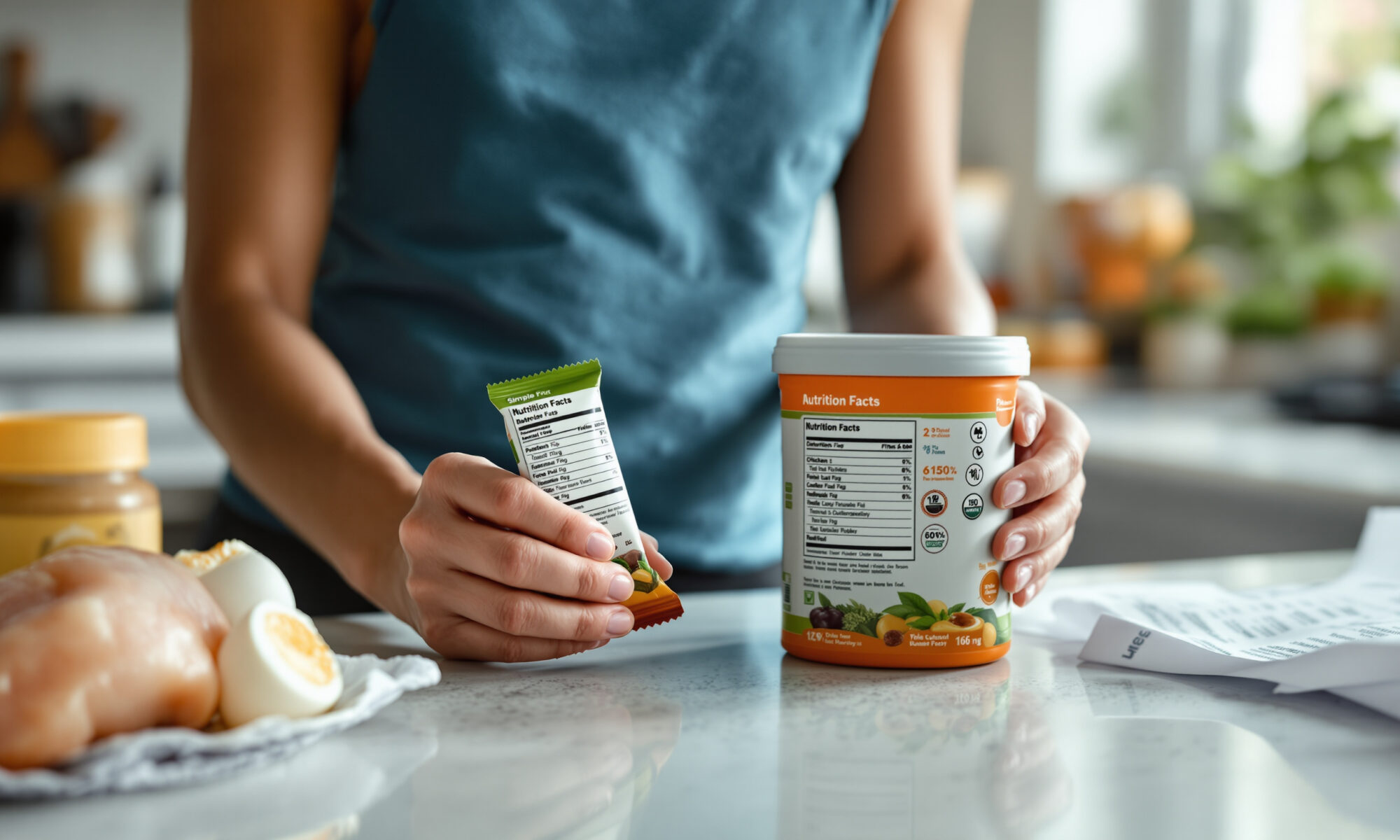
Protein bars healthy enough to earn a place in your diet? Sometimes. A decent bar can be a practical protein source, but plenty are just processed snacks with a protein halo. The smart move is to read five lines first: protein, total carbohydrate, dietary fiber, total sugars, and added sugars, then check whether sugar alcohols are listed and which ones they are. That tells you far more than the front-of-pack claims.
What makes a protein bar “healthy” in practice?
For most lifters, the useful question isn’t whether a bar is universally healthy. It’s whether it gives you enough protein, reasonable calories, and a digestible ingredient profile for the situation you’re in.
A bar makes sense when convenience matters and missing the meal is the realistic alternative. Real food usually wins on satiety, micronutrients, and often cost per gram of protein, but bars win on portability, shelf life, and zero prep. That’s the trade.
If you’re trying to build meals around actual food first, our guides on high-protein breakfast ideas and post-workout meals for strength training days are the better foundation. Bars are backup, not magic.
Read the label in this order
FDA labeling rules under 21 C.F.R. §101.9 still center the same required Nutrition Facts lines in 2026: total carbohydrate, dietary fiber, total sugars, and other standard lines. Sugar alcohol grams may be declared voluntarily, which matters because many brands highlight them on the front while the legal label structure doesn’t treat “net carbs” as a required FDA term.
That means you should ignore the marketing claim first and read the actual panel second. Honestly, this is where most of the confusion disappears.
-
Check protein per bar. Many commercial bars land around 15 to 22 grams and roughly 180 to 240 kcal based on 2025-2026 product listings.
-
Check total calories. A 20-gram protein bar at 200 kcal can be useful; the same protein at much higher calories may just be a candy bar with whey added.
-
Read total carbohydrate, then dietary fiber, total sugars, and added sugars. Those lines are more informative than a front-of-pack low-carb slogan.
-
If sugar alcohols are listed, note the type. Erythritol, maltitol, and sorbitol don’t behave the same in digestion or in how low-carb trackers estimate “net carbs.”
-
Scan the ingredient list. FDA guidance since 2018 has also mattered for what isolated or synthetic non-digestible carbohydrates may count as dietary fiber, so fiber totals can look better on paper than the bar feels in your gut.
If you’ve already read our piece on how to read protein powder labels without getting misled, the same principle applies here: the front label sells, the back label explains.
Protein bars vs real food: the numbers that actually matter
Here is the comparison most articles skip. A bar isn’t competing with a perfect meal cooked in your home kitchen. It’s competing with the food you would realistically eat instead, or with skipping protein entirely between meals.
| Food | Serving | Protein | Calories | Total Sugars | Sugar Alcohols | Fiber |
|---|---|---|---|---|---|---|
| Barebells Chocolate Dough bar (2025 listing) | 1 bar | 20 g | 200 kcal | 1 g | 6 g | 3 g |
| Cooked chicken breast | 100 g | 31 g | 165 kcal | 0 g | 0 g | 0 g |
| Large eggs | 2 eggs | 12-14 g | 140-160 kcal | 0-1 g | 0 g | 0 g |
| Peanut butter | 100 g | 25-30 g | 588-600 kcal | 9-10 g | 0 g | 6-8 g |
Two things jump out. Chicken is far more protein-dense than a bar, and peanut butter is a poor stand-in for a “protein food” if your goal is efficient protein intake. It’s nutritious in some contexts, but as a protein source per calorie, it loses badly.
Eggs sit in the middle. Great food. Less convenient on the go unless you’ve planned ahead, which is exactly why bars keep selling.
Are “net carbs” on protein bars legit?
They’re common, but “net carbs” is a market heuristic, not an FDA-defined line on the Nutrition Facts panel. The usual consumer math is total carbohydrate minus dietary fiber minus sugar alcohols, and brands often use that framing when selling low-carb bars.
The catch is that this simplification can blur real differences between ingredients. Erythritol is often treated by tracking apps and low-carb guides as contributing little or no usable energy in net-carb calculations, while maltitol and sorbitol are often only partially subtracted in practice because some consumers and coaches find they affect blood glucose or GI comfort more than erythritol does. That’s not an FDA formula. It’s a heuristic.
There has not been a new 2026 FDA rule redefining net carbs or reclassifying all sugar alcohols into one neat box. The regulatory structure is still the same basic one: required carb and sugar lines, plus guidance for constituents like allulose. FDA’s October 2020 guidance also clarified that allulose must be declared separately in labeling treatment, including calories from allulose, which is another reason front-label carb claims can get messy fast.
One overlooked point: a low net-carb bar can still wreck your stomach if the polyol dose is high for you. If you’ve had bloating or urgent bathroom trips after bars, this is the first place I’d look.
Saving money: use cost per gram of protein, not package hype
You don’t need a complicated formula. Take the item price and divide it by the grams of protein in the serving.
If a bar costs $2.50 and gives you 20 grams of protein, that’s $0.125 per gram of protein. If a ready-to-eat food gives you 30 grams for $3.00, that’s $0.10 per gram. The cheaper protein source isn’t always the one with the louder performance branding.
Real food often wins this calculation, especially chicken, Greek yogurt, cottage cheese, milk, eggs, and canned fish. Bars can still be worth buying when they prevent a missed meal, survive a gym bag, or fit a travel day better than a cooler full of food. That’s the practical lens.
For readers trying to build a more food-first plan, how nutrition supports training results and quick healthy snack ideas for athletes are more useful starting points than comparing candy-coated bars forever.
When a bar makes sense, and when real food is the better call
Use a protein bar when convenience is the main problem you’re solving. Think airport delay, back-to-back meetings, long commute after training, or a pre-packed hiking day. In those moments, the perfect whole-food meal usually isn’t available.
Reach for real food when you’re at home, when appetite is high, or when cutting calories and trying to stay full. Real meals usually bring better satiety and a broader nutrition package. If your morning appetite is low, though, a smaller portable option may still beat forcing a heavy meal, which is why our piece on what to eat before a morning workout when you have no appetite tends to resonate with early trainers.
What I’d do in practice is simple: keep one or two bars around as insurance, not as the backbone of your diet. If you’re eating two or three bars every day, that’s usually a planning problem.
FAQ
Are protein bars healthy for weight loss?
They can be, if the bar helps you hit protein targets without pushing calories too high. The trap is assuming a bar is automatically “light” because it’s high in protein; some bars are still calorie-dense snacks.
How do you know if a protein bar has too much sugar?
Check total sugars and added sugars on the Nutrition Facts panel, not just the front label. Then compare that against the protein content and total calories to see whether you’re getting a protein food or mostly a dessert with extra whey.
Are sugar alcohols in protein bars bad for you?
Not inherently, but tolerance differs a lot. Erythritol, sorbitol, and maltitol can feel very different in the gut, so if you have digestive issues or a medical condition affected by carbohydrate tolerance, check with a qualified clinician or dietitian and test products cautiously.
Is real food better than a protein bar after a workout?
Usually, yes, if it’s available. Real food often gives you more protein for the calories and a better overall meal, but a bar is perfectly reasonable when convenience decides whether you eat at all.
Do net carbs on protein bars mean the bar is low carb?
Not automatically. Net carbs is a consumer and marketing calculation, not an FDA-required label line, so you still need to inspect total carbohydrate, fiber, sugars, and any sugar alcohol listing yourself.