
Walk into almost any gym, and you’ll see people working their arms with dumbbells, barbells, cables, and machines. There are countless ways to train your biceps and triceps, yet most workouts rely on the same basic movements week after week.
There’s nothing wrong with traditional arm exercises. They build strength, develop muscle, and deserve a place in nearly every resistance training program. But there’s another element of arm development that often receives less attention: rotation.
Rotational arm training introduces controlled twisting movements into resistance exercises. When incorporated correctly, these movements can challenge muscles involved in turning the forearm, gripping, and stabilizing the wrist and elbow.
For anyone looking to improve their arm workouts, understanding the role of rotation could open the door to a more complete approach to training.
Why Traditional Arm Exercises Don’t Tell the Whole Story
Most people associate arm development with two primary muscle groups: the biceps and triceps. Naturally, exercises such as curls, pushdowns, and extensions form the foundation of many arm routines.
However, the arms contain numerous muscles that work together to produce and control movement.
The biceps brachii, for example, doesn’t simply bend the elbow. It also helps rotate the forearm into a palm-up position, a movement known as supination.
Other muscles, including the brachialis, brachioradialis, pronator teres, and supinator, contribute to elbow movement, forearm rotation, and overall arm function.
Traditional exercises engage several of these muscles, but the amount of rotational resistance involved varies considerably depending on the exercise and equipment.
Adding exercises that specifically challenge forearm rotation can help address movement patterns that may receive less direct attention during conventional workouts.
What Is Rotational Arm Training?
Rotational arm training involves performing controlled turning movements against resistance. Depending on the exercise, this may involve rotating the forearm inward, outward, or through a limited range while maintaining tension.
Two important movements are pronation and supination.
Supination occurs when the forearm rotates so the palm faces upward. Pronation occurs when the forearm rotates in the opposite direction, turning the palm downward.
These movements are part of everyday activities, from turning a screwdriver to opening a jar or controlling a tennis racket.
In resistance training, they can be developed through carefully selected exercises using dumbbells, cables, resistance bands, or specialized equipment.
The goal isn’t simply to twist the wrist as aggressively as possible. Effective rotational training requires controlled movement, appropriate resistance, and proper alignment.
How Rotation Changes the Way Your Arms Work
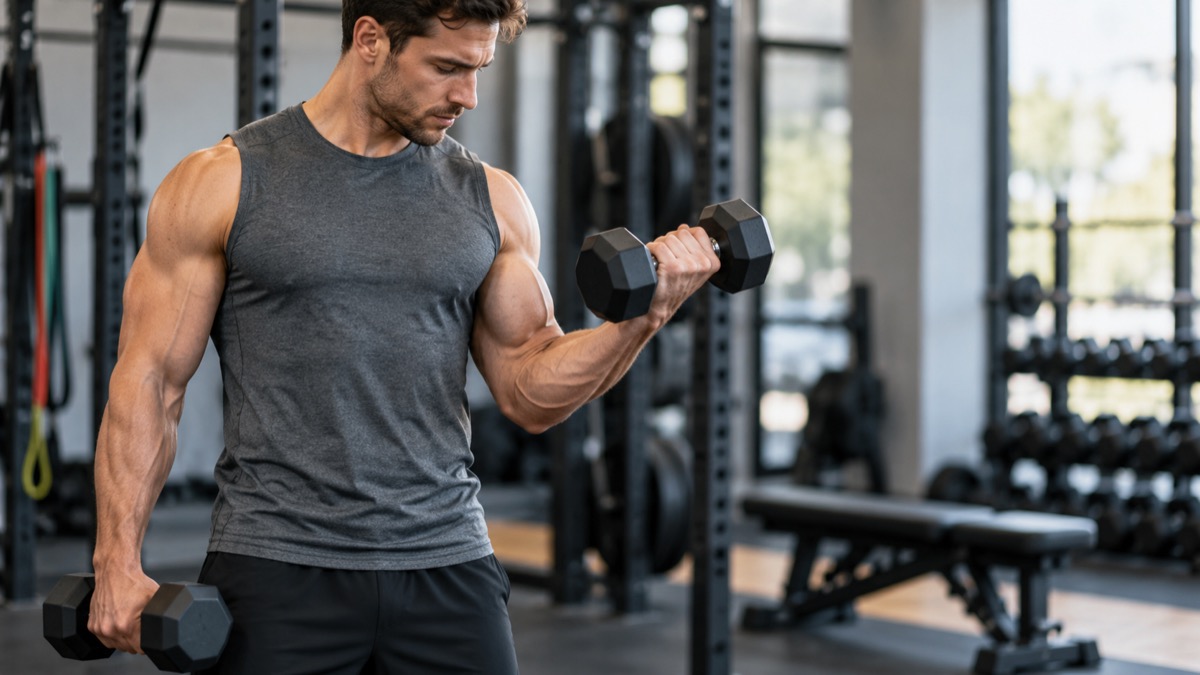
Consider a standard dumbbell curl. The primary movement involves bending the elbow to raise the weight. Depending on your grip, the forearm may remain relatively stationary throughout the repetition.
Now consider a curl that incorporates forearm supination as the weight rises. The elbow continues to flex, but the biceps also participates in rotating the forearm.
This doesn’t automatically make the exercise superior. It changes the demands placed on the muscles and introduces another movement component.
Similarly, resisted pronation and supination exercises can directly challenge the muscles responsible for controlling forearm rotation.
These differences are important because muscular development isn’t determined by exercise variety alone. Resistance, range of motion, technique, training volume, and progressive overload all influence results.
Rotational movements provide another useful option within a well-designed strength training program.
The Often-Overlooked Role of Forearm Strength
Forearm training frequently takes a back seat to biceps and triceps exercises. Yet the forearms play a major role in gripping, lifting, carrying, and controlling resistance.
Several muscles work together to stabilize the wrist and produce movements involving the hand and forearm.
Developing these muscles can support activities that require grip endurance and controlled rotation.
For example, athletes participating in golf, tennis, baseball, and other sports frequently perform movements that involve forearm positioning and rotational control.
While sport-specific performance depends on many factors, forearm strength and coordination are useful components of general physical preparation.
For recreational lifters, additional forearm exercises may also help create a more balanced training routine.
Adding Rotational Resistance to Your Arm Workouts
One advantage of rotational training is that it doesn’t require replacing your existing exercises.
Instead, rotational movements can complement the curls, extensions, rows, and pressing exercises you’re already performing.
Resistance bands offer one practical way to introduce rotational resistance. By changing the direction of the pull, bands can create tension during controlled forearm movements.
Specialized exercise equipment can also make rotational resistance easier to incorporate into an arm-training routine.
For example, the ARM-Z rotational arm training device uses resistance bands and a rotating movement to provide an alternative way to challenge the arms during exercise.
Regardless of the equipment selected, the most important consideration is maintaining control throughout the movement.
Start with manageable resistance, avoid forcing the joints beyond a comfortable range, and increase difficulty gradually as your technique improves.
Three Ways to Introduce Rotation Into Your Training
1. Supinating Dumbbell Curls
Begin with a neutral grip, palms facing inward. As you curl the dumbbells, gradually rotate your forearms until your palms face upward.
Lower the weights under control while reversing the rotation. Avoid swinging your upper arms or using momentum to complete the movement.
2. Resisted Forearm Pronation and Supination
Using light resistance, support your forearm and slowly rotate between comfortable palm-up and palm-down positions.
Keep the movement controlled and avoid excessive wrist bending. This exercise emphasizes the muscles responsible for forearm rotation.
3. Controlled Rotational Band Exercises
Attach a resistance band securely and position yourself so the band provides resistance against the intended turning movement.
Use a light band initially and focus on smooth, deliberate repetitions. The objective is to maintain muscular control rather than generate maximum rotational force.
Why More Resistance Isn’t Always Better
One common mistake in resistance training is assuming that heavier loads automatically produce better results.
Although progressive overload is important for building strength and muscle, increasing resistance at the expense of technique can reduce the effectiveness of an exercise.
This is especially relevant when training smaller muscles responsible for forearm rotation.
Using excessive resistance may encourage unwanted movement at the wrist, elbow, or shoulder.
For rotational exercises, controlled repetitions and a comfortable range of motion should take priority over the amount of resistance used.
Progress gradually, and stop if you experience sharp pain or unusual joint discomfort.
Building a More Complete Arm Training Routine
Great arm development rarely comes from one exercise or piece of equipment. It comes from consistently applying sound training principles over time.
Traditional curls and extensions remain valuable because they allow lifters to progressively challenge the major muscles of the upper arms.
Forearm exercises, grip training, and controlled rotational movements can complement those foundational exercises by introducing additional movement patterns.
The key is finding a balance between variety and consistency.
Rather than constantly changing your entire workout, consider adding a small amount of rotational training and evaluating how it fits into your overall program.
Final Thoughts: Don’t Overlook Rotation
Building stronger, more developed arms involves more than repeating the same curls and extensions indefinitely.
The arms are designed to bend, straighten, grip, stabilize, and rotate. Training these functions with appropriate resistance can help create a more comprehensive exercise routine.
Rotational arm training isn’t a replacement for traditional strength exercises, nor is it a shortcut to bigger muscles. It’s another training approach worth considering.
Sometimes improving your workouts doesn’t require abandoning what already works. It simply means recognizing an overlooked movement and giving it the attention it deserves.