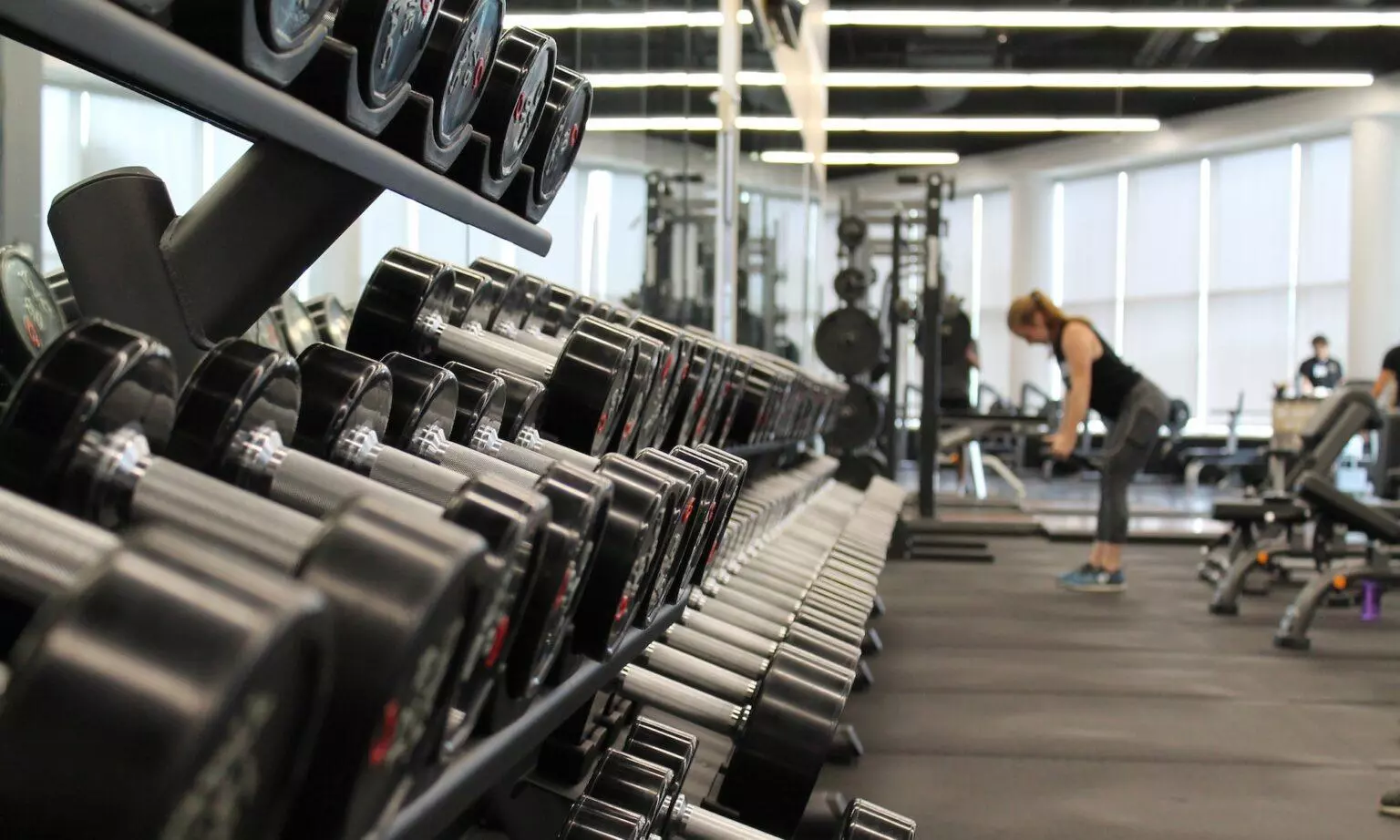

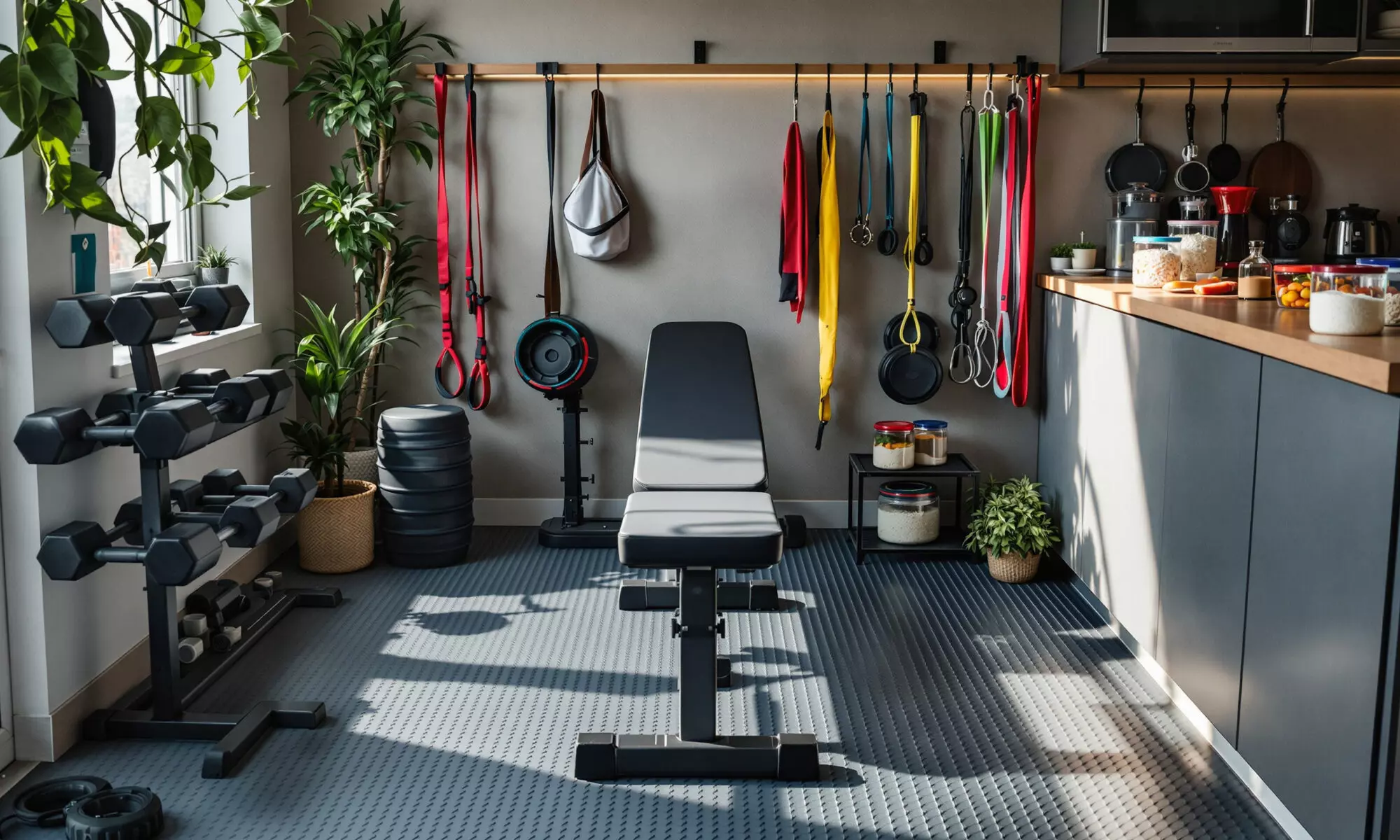
A good home gym setup is the one you’ll actually use three to five days per week, not the one that looks expensive on Instagram. For most people, that means a small training corner, a short equipment list, and a meal prep system that cuts weekday friction. If your space supports squats, hinges, pushes, pulls, and batch cooking twice a week, you’re already 90% of the way there.
What a home gym setup needs to do
Your home gym setup does not need to mimic a commercial gym. It needs to remove excuses, support progressive overload, and fit the room without turning your house into a storage problem.
Resistance-training research generally finds that muscle and strength gains come from hard sets, enough weekly volume, and progression over time, not from owning 14 cable attachments. Honestly, if you’re not already training hard and sleeping enough, premium gear matters far less than a decent bench, loadable resistance, and a plan you can repeat.
That’s also why your kitchen setup belongs in the same conversation. Training consistency and eating consistency rise or fall together. If you finish a session and have no protein ready, the system is incomplete.
Space and budget: the smartest first pass
Start with the footprint, then buy around it. A basic strength corner can work in roughly 6 x 8 feet if your ceiling allows overhead pressing and your floor can handle a rubber mat or platform.
Here’s the practical split. If you have under 50 square feet, prioritize adjustable dumbbells, a bench, bands, and floor space. If you have 70 to 100 square feet, a rack and barbell start to make sense, especially if more than one person trains at home.
| Setup tier | Typical 2026 space | Typical 2026 cost | What it covers well | Main limitation |
|---|---|---|---|---|
| Minimal | 24-40 sq ft | $250-$700 | Dumbbell presses, rows, split squats, RDLs, carries | Harder to load heavy bilateral squats |
| Compact | 40-70 sq ft | $700-$1,800 | Most full-body strength work with bench, adjustable DBs, bands, pull-up bar | Top-end loading can get expensive fast |
| Rack-based | 70-120 sq ft | $1,500-$4,000 | Squat, bench, deadlift, pull-ups, barbell progression | More noise, more floor protection needed |
| Hybrid cardio + strength | 90-150 sq ft | $2,000-$5,500 | Strength plus bike, rower, or treadmill work | Cardio machines eat space quickly |
Those ranges reflect typical 2026 pricing for mainstream home-gym buyers, not luxury custom builds. Used markets can cut the total by 30% to 50%, but inspect benches, cables, welds, and adjustable dumbbell mechanisms before handing over cash.
The equipment that earns its floor space
If you want the shortest buying list that still covers almost everything, build around movement patterns. You need a squat pattern, a hinge, horizontal push and pull, vertical push and pull if possible, single-leg work, and some core training.
- Adjustable bench: flat-to-incline if budget allows.
- Adjustable dumbbells or a barbell plus plates: pick one loading system first, not both.
- Resistance bands: cheap, portable, great for warm-ups and accessories.
- Rubber flooring or dense mats: protects your floor and reduces noise.
- Storage: a shelf, hooks, or plate tree so setup time stays under two minutes.
From there, choose your path. For busy adults in small spaces, adjustable dumbbells often beat a cheap all-in-one machine because they support more useful exercises and waste less room. If your main goal is long-term strength progression, a squat rack with safeties, barbell, plates, and bench is the stronger investment.
Don’t overlook cardio options that fold into daily life. A walking pad can make sense if you work from home and need low-intensity movement on top of lifting; our walking pad workout plan for indoor steps is a good example of how to use one without pretending it replaces strength work.
One myth worth killing: you do not need unstable gadgets to make training “functional.” Most people get more transfer from getting stronger at split squats, Romanian deadlifts, rows, presses, carries, and pull-ups than from balancing on a wobble board while curling 10-pound dumbbells.
How to organize the room so you actually train
Good setup beats good intentions. Keep your most-used tools visible and your least-used tools stored high or out of the main lane.
Put the bench, dumbbells, and mat in one triangle so you can move from press to row to split squat with almost no reset time. Hang bands on wall hooks. Store collars, straps, and small accessories in a bin you can reach with one hand. If it takes five minutes to clear the area, training frequency usually drops.
Traffic flow matters more than decor, but environment still changes adherence. If you want visual ideas, group your planning around home, food, and decor: home gym decor ideas, protein meal prep recipes, and gym wallpaper and wall decor are useful starting points.
There’s also a safety piece. Leave enough room to bail a dumbbell, open a rack safely, and move around a loaded bar without twisting through boxes. If you have joint issues or you’re setting up for an older family member, a chair-height bench, stable footwear, and clear walkways matter more than aggressive aesthetics. Our guide to strength training over 50 covers some of the exercise-selection logic that carries well into a home setup.
Build the meal prep side like a training station
Your kitchen should work the same way as your gym: low friction, repeatable, and boring in the best sense. Batch-cooking is not about culinary ambition. It’s about making the high-protein choice the easy choice on a Wednesday when work ran long.
The research on protein intake for lifters is pretty consistent here. Across resistance-training studies and meta-analyses through the 2018-2023 period, a practical intake for muscle retention and gain is often around 1.6-2.2 g/kg/day, with higher ends more relevant during dieting or for lean, hard-training athletes. That doesn’t mean you need six perfect meals. It means your kitchen should make 25-40 g protein feedings simple.
Set up one shelf in the fridge for ready protein, one for cooked carbs, and one for washed produce. Keep a digital food scale, storage containers, freezer bags, and a marker in the same drawer or basket. Label the date. Small thing, big payoff.
A simple two-cook weekly system
Cook twice per week, not once. Sunday and Wednesday works well because food quality and compliance tend to fall off by day four.
A practical batch could be 1.5-2 kg chicken thigh or breast, 800 g dry rice or potatoes for 6-8 servings, a pot of chili or lentils, chopped fruit, Greek yogurt, and two easy sauces. If you use creatine, keep it near breakfast or your post-workout meal so the habit stays anchored; our breakdown of creatine monohydrate timing and common mistakes explains why consistency matters more than a magical window.
A real starter plan for training in a small home gym
A home gym setup is only as good as the plan it supports. For most people with limited time, a three-day full-body split gives the best return because frequency stays high without needing a huge equipment menu.
Here’s what I’d do in practice with adjustable dumbbells, a bench, bands, and a pull-up bar: day 1 goblet squat 4 x 6-10, dumbbell bench 4 x 6-10, one-arm row 4 x 8-12, RDL 3 x 8-10, plank 3 x 30-45 seconds. Day 2 split squat 3 x 8-12, overhead press 4 x 6-10, pull-up or band pulldown 4 x 6-12, hip thrust 3 x 8-12, carry 3 x 20-40 meters. Day 3 front-foot elevated split squat 3 x 10-12, incline dumbbell press 3 x 8-12, chest-supported row 3 x 8-12, dumbbell deadlift 3 x 6-10, lateral raise 2-3 x 12-20.
Progress by adding reps first, then load. Keep 1-3 reps in reserve on most sets. The evidence on failure training is mixed and context-dependent; trained lifters can use it strategically, but most home trainees recover better when they don’t redline every set, which is why our piece on training to failure and long-term progress is worth reading before you copy social media intensity.
If your knees are cranky, swap bilateral squat volume for split squats, box squats, step-ups, or controlled tempo work. That’s where a compact home setup can actually help, because you’re not waiting on a machine and can fine-tune range of motion on the fly. For more joint-friendly substitutions, see our low-impact workout plan for knee pain.
Common mistakes that waste money
The biggest one is buying for fantasy-you. People love the idea of a full rack, specialty bars, and a rower, then end up training in a space too cramped to use any of it well.
Another mistake is treating meal prep as a one-day marathon. That usually creates food fatigue, quality drop-off, and a Wednesday night takeout spiral. Two shorter prep blocks beat one heroic Sunday session for most working adults.
Last one. Don’t cheap out on flooring, bench stability, or rack safeties if you’re going heavy. That’s where saving $150 can create a very dumb injury risk. If you have a cardiovascular condition, diabetes medication, a history of disordered eating, or you’re returning after injury, get a qualified clinician or sports dietitian involved before making major training or nutrition changes.
FAQ
How much space do I need for a home gym setup?
You can build a useful setup in 24-40 square feet if you use adjustable dumbbells, a bench, and bands. A rack-based setup usually needs closer to 70-120 square feet plus enough ceiling height for overhead work.
What’s the best first purchase for a home gym?
For most people, an adjustable bench plus adjustable dumbbells gives the best mix of exercise options and space efficiency. If maximal strength is your main goal and you have the room, a rack, barbell, plates, and safeties are the better long-term base.
How often should I meal prep if I train at home?
Twice per week works better than once for most people. It keeps food fresher, reduces decision fatigue, and makes it easier to hit daily protein targets consistently.
Can you build muscle with a small home gym setup?
Yes, if you can train hard through a full range of motion, add reps or load over time, and get enough weekly volume. A compact setup can build plenty of muscle, though very strong lifters may outgrow limited dumbbell loading.
Do I need cardio equipment in a home gym?
No. Walking outdoors, stairs, jump rope, and short conditioning circuits cover a lot. Cardio equipment becomes more useful when weather, schedule, or work-from-home habits make indoor movement easier to sustain.