Grip strength longevity is not a gimmick. A simple handgrip test is one of the quickest ways clinicians can screen for frailty, probable sarcopenia, and future loss of independence, especially in older adults. It also shows up repeatedly in cohort research as a marker linked with mortality risk. The key nuance is this: grip strength is a useful signal, not a magic cause of long life.
Why grip strength gets so much attention
Doctors measure grip because it is cheap, fast, repeatable, and surprisingly informative. With a handheld dynamometer, you can get a rough snapshot of neuromuscular function in under 1 minute, which is hard to match in a busy clinic.
More importantly, weak grip tends to travel with other problems. Lower total muscle strength, lower physical activity, undernutrition, chronic disease burden, frailty, and sarcopenia often cluster together. Grip is not the whole story, but it is a practical proxy for the bigger story.
That is why the fitness assessments often used in longevity-minded practice usually include some form of strength testing, even when the exact tool differs. If your tissues, nerves, and motor system are losing capacity, your hand often shows it before your Instagram physique does.
What the research on grip strength longevity actually shows
The strongest case for grip strength longevity comes from association data, not intervention trials. Large cohort studies have repeatedly found that people with lower grip strength have higher rates of disability, hospitalization, and earlier death, even after adjusting for age and some health factors.
A widely cited 2015 analysis from the PURE study, published in The Lancet, followed more than 140,000 adults across 17 countries and found lower grip strength was associated with higher all-cause mortality and cardiovascular mortality. That did not prove weak grip causes those outcomes. It showed that grip is a useful marker of overall health risk.
Other population work, including UK Biobank analyses from 2018 and later, has linked lower grip strength with worse cardiometabolic health, lower physical function, and higher disease risk. In geriatrics, the relationship is even more practical: weaker grip often tracks with slower gait speed, harder chair rises, and difficulty with daily tasks.
Guidelines also reflect that evidence. The 2019 European Working Group on Sarcopenia in Older People, known as EWGSOP2, uses low handgrip strength as a primary sign of probable sarcopenia. That matters because sarcopenia is not just about muscle mass. It is about lost function.
| Evidence or standard | Year | Concrete detail | Why it matters |
|---|---|---|---|
| PURE cohort study | 2015 | More than 140,000 adults across 17 countries | Lower grip strength was associated with higher all-cause and cardiovascular mortality |
| EWGSOP2 sarcopenia guideline | 2019 | Low grip strength cutoffs: <27 kg for men, <16 kg for women | Used clinically as a marker of probable sarcopenia |
| Asian Working Group for Sarcopenia | 2019 | Low grip strength cutoffs: <28 kg for men, <18 kg for women | Shows that population-specific thresholds can differ by 1 to 2 kg |
| Typical clinic testing | 2026 practice | Usually 2 to 3 trials per hand, best score recorded | Good reliability when the protocol is standardized |
Association is not causation
This part gets butchered online. Stronger hands do not automatically mean stronger arteries, lower cancer risk, or a longer life because your forearms are somehow protective.
Grip strength is probably acting as a summary measure. It reflects how much muscle you have kept, how well your nervous system drives force, whether you are active enough, whether you are underfueled or ill, and how much aging-related decline has already happened. If you improve grip by 5 kg with a few months of farmer carries, that is good. It does not guarantee you changed your mortality trajectory by the same amount implied in cohort data.
Still, dismissing the measure would be a mistake. Blood pressure is also a marker and a risk factor, and clinicians still care about it. Grip is similar in one sense: useful because it is simple and because it often points toward broader action.
How doctors measure grip strength
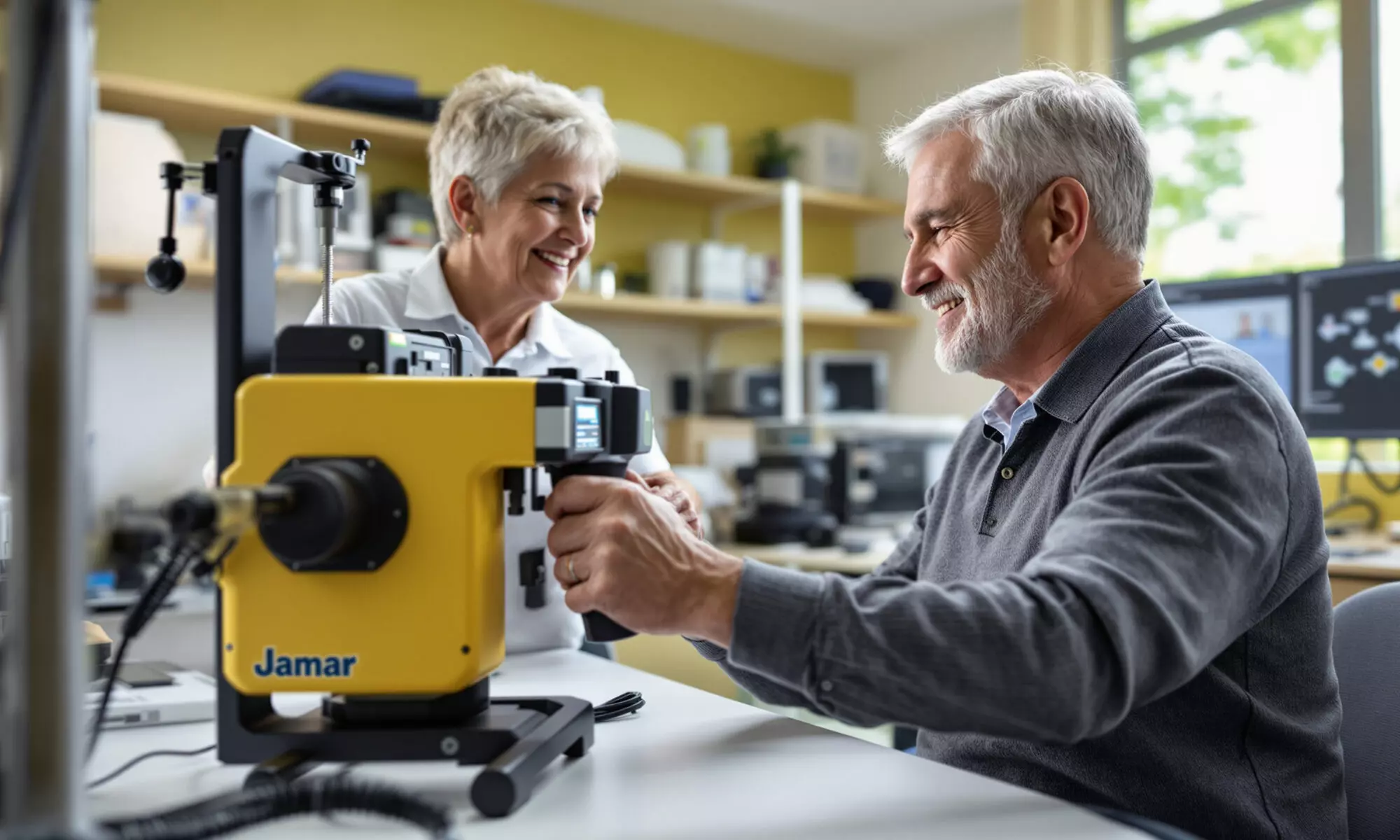
The standard tool is a handgrip dynamometer, often a Jamar-type device in clinics and research settings. Position matters. So does consistency. If you test with your elbow bent one month and arm hanging straight the next, your numbers are less comparable.
- Use a calibrated dynamometer if possible.
- Test both hands for 2 to 3 efforts each, with 30 to 60 seconds of rest.
- Squeeze hard for about 3 to 5 seconds per trial.
- Record the best score in kilograms, then compare future tests using the same setup.
If you have arthritis, hand pain, a recent wrist or elbow injury, or a neurologic condition, interpretation gets trickier. In that case, it is worth asking a clinician or physical therapist to put the number in context rather than chasing a raw score.
For healthy adults, a single grip score is less informative than a trend. A stable or improving result over 6 to 12 months is usually more meaningful than obsessing over a small day-to-day swing.
What normal people can do with this information
If you are older, deconditioned, or coming back from illness, low grip is a prompt to take strength training seriously. That does not mean turning every week into an arm-wrestling camp. It means treating full-body strength, adequate protein, and regular movement as health behaviors, not vanity projects.
That broader framing matters because strength decline rarely starts in the hand. It tends to show up across the system, which is why long-term data on the age when strength and fitness begin to decline are so relevant here. Grip can be the visible tip of that trend.
For lifters, the main value is different. A poor grip score relative to your size and training age can hint at underdeveloped pulling strength, neglected carries, hand pain, or fatigue. Honestly, this only matters if you are already training hard and sleeping enough. A weak deadlift lockout in a sleep-deprived office worker is rarely a hand problem first.
How to improve grip without wasting training time
The evidence-based move is boring. Get stronger overall, especially with heavy pulling, carries, and isometric holds. Most people do not need a bag full of novelty grippers.
Research on resistance training generally finds that whole-body strength work improves function better than isolated gimmicks, especially in older adults. That is one reason our coverage of the fundamental strength moves worth keeping in your program leans heavily on rows, deadlift patterns, carries, and loaded lower-body work. Those exercises train the grip while also building the legs, trunk, and back that actually support independent living.
A practical 2-day add-on looks like this:
Day 1: farmer carries for 3 to 5 sets of 20 to 40 meters, then dead hangs for 2 to 4 sets of 15 to 45 seconds. Day 2: heavy dumbbell Romanian deadlifts for 3 to 4 sets of 6 to 8 reps, followed by chest-supported rows for 3 to 4 sets of 8 to 12 reps, using straps only after your grip is the limiting factor. That gives you crushing, support, and open-hand grip exposure without hijacking recovery.
For older adults, start simpler. Two or three full-body sessions per week, plus carries with manageable loads, is enough to move the needle. If that is your lane, the priorities in our piece on which muscle groups older adults should emphasize fit the grip-strength story well: legs, hips, upper back, and trunk first, hands as part of the package.
One myth needs killing here. You do not need to train to failure on every set to improve grip or the bigger strength qualities around it. Fatigue has a cost, and in many cases it is smarter to leave a rep or two in reserve, especially on carries and hangs where technique and joint comfort matter. Our analysis of whether training to failure helps long-term progress covers why that tradeoff matters.
Overlooked cases competitors usually ignore
Body size changes the picture. Larger people often produce higher absolute grip scores, so a 90 kg lifter and a 55 kg older adult should not be judged the same way. That is one reason clinical cutoffs are population tools, not performance rankings.
Another edge case is endurance sport. Runners and cyclists can have good cardiometabolic health with unimpressive grip, while manual laborers can score well on grip despite poor aerobic fitness. Grip strength longevity is useful, but it is not a replacement for walking speed, lower-body power, blood pressure, or cardiorespiratory fitness. If your aerobic base is lagging, building that with methods like zone 2 cardio still matters for healthspan.
Then there is underfueling. Low energy availability, rapid weight loss, illness, and prolonged inactivity can all drag grip down. When a score drops suddenly, think bigger than forearms. Ask what changed in training load, body weight, sleep, pain, medications, or daily activity.
FAQ
Is grip strength really linked to longevity?
Yes, in observational research. Large cohort studies, including the 2015 PURE study, show that lower grip strength is associated with higher mortality risk, especially in older and less healthy populations. That does not mean stronger grip alone causes longer life.
What is a low grip strength score for adults?
A commonly used 2019 EWGSOP2 cutoff is less than 27 kg for men and less than 16 kg for women, mainly for identifying probable sarcopenia in older adults. Other groups, such as the Asian Working Group in 2019, use slightly different cutoffs.
Can grip training by itself improve health outcomes?
It can improve hand strength and probably make some tasks easier, but direct evidence that isolated grip work changes hard health outcomes is limited. In practice, full-body resistance training is the better bet because it improves more than your hands.
How often should you test grip strength?
Every 2 to 3 months is enough for most people if the setup stays the same. Testing weekly is usually noise unless you are monitoring rehab or a specific medical issue.
Is grip strength more useful than muscle size?
For health screening, often yes. Muscle size tells you something, but force production and function usually tell you more about how a person moves, copes with aging, and maintains independence.