The best electrolyte powder ingredients start with sodium. For most people, that’s the main thing that determines whether a product is useful for long, hot, sweaty training or just expensive flavored water. Potassium has a secondary role. Carbohydrate can matter for longer sessions. Magnesium is the most over-marketed ingredient here, because current reviews still don’t show reliable cramp prevention in exercise settings.
Sodium is the ingredient that usually matters most
If you’re reading labels, start with sodium and ignore the front-of-pack hype until you’ve checked that number. Reviews and position statements published from 2021 to 2023, plus the IOC’s 2022 heat consensus, all point in the same direction: sodium is the primary electrolyte lost in sweat and the main replacement target when you want to maintain plasma volume, support fluid retention, and keep thirst working in your favor.
That’s a different question from general public sodium advice. The usual adult Adequate Intake is 1,500 mg per day, but athlete replacement during hard sweating is a separate issue. If you train for 90 minutes in cool air and barely dampen your shirt, you probably don’t need a high-sodium powder. If you run, ride, or practice in heat for more than an hour and finish with salt crust on your clothes, you might.
Fitness marketing loves to talk about a full mineral panel. Honestly, for sweat replacement, the evidence keeps dragging the conversation back to sodium.
How much sodium should an electrolyte powder provide?
This is where generic reviews usually get fuzzy. The useful range depends on context, but the research-backed targets are not mysterious.
| Ingredient | What it does | Useful range from guidance | Practical take |
|---|---|---|---|
| Sodium | Primary sweat-loss electrolyte; helps fluid retention and thirst | 460-690 mg/L in many sports-drink guidelines; 500-700 mg/L for >1 hour in heat from IOC 2022; 1,150-1,380 mg/L in some carbohydrate-electrolyte drink targets | Most people doing long, sweaty training should judge a powder by this number first |
| Potassium | Partial replacement of smaller sweat losses | 78-195 mg/L in sports-drink guidance | Nice to have, but usually not the deciding factor |
| Carbohydrate | Supports performance and fluid absorption during prolonged exercise | 6-8% drink concentration in sports-nutrition guidance | Useful for long sessions, pointless for many short gym workouts |
| Magnesium | Often marketed for cramp prevention | 2023-2025 reviews: no robust RCT-backed target for exercise-associated cramp prevention | Don’t choose a powder mainly because it has extra magnesium |
Notice the spread on sodium. Older and broader sports-drink guidance often lands around 460 to 690 mg per liter, while the IOC’s 2022 guidance for athletes exercising for more than an hour in the heat suggests roughly 0.5 to 0.7 g per liter, or 500 to 700 mg/L. Other carbohydrate-electrolyte drink targets can be much higher, around 50 to 60 mmol/L sodium, which works out to about 1,150 to 1,380 mg/L.
So what do you do with that range? In practice, I would treat roughly 500 to 700 mg/L as a very solid middle ground for long, sweaty training, then push higher if you’re a heavy or salty sweater, the session is very hot, or your sport makes drinking opportunities limited.
Potassium, magnesium, and the label-reading trap
Potassium matters, but less than labels imply. Sweat contains potassium, and sports-drink guidance has long included it, typically around 78 to 195 mg/L, to partially replace losses. That’s reasonable. It just isn’t the lead actor.
Magnesium is where a lot of powders drift from physiology into marketing. Cochrane and other systematic reviews through 2023 to 2025 still don’t show robust randomized trial evidence that magnesium supplementation reliably prevents exercise-associated muscle cramps. That’s the myth worth killing. If a brand makes magnesium the hero ingredient while sodium is an afterthought, I’d put that tub back on the shelf.
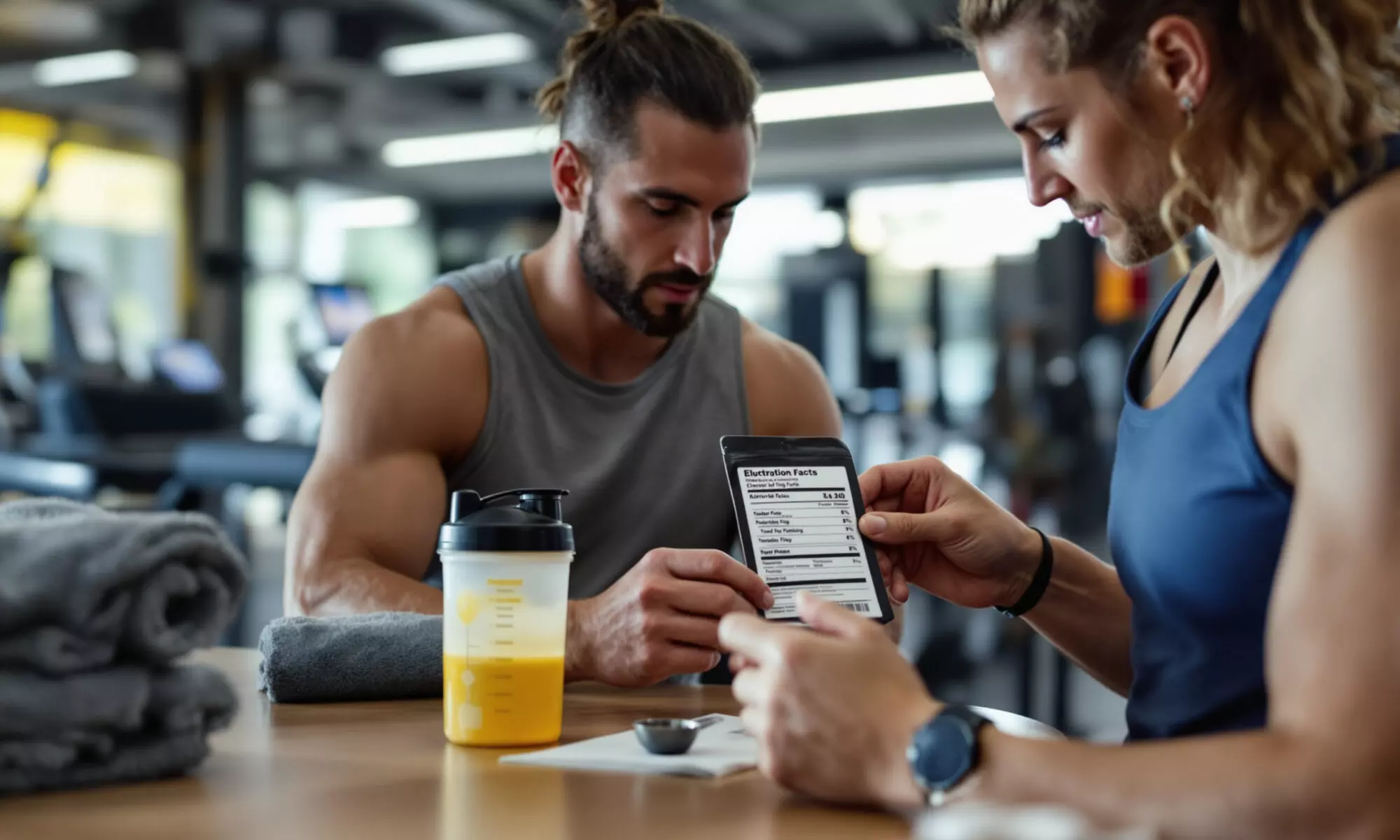
A useful parallel is how you should read any supplement label: claims first, numbers second, relevance third. The same skepticism applies when you’re comparing proteins, which is why our guide on how to read protein powder labels without getting misled maps well onto electrolyte products too.
Match the powder to the session
The right formula depends more on sweat rate, heat, and session length than on your identity as a lifter, runner, or team-sport athlete. Long, hot, high-sweat sessions move the needle. A 45-minute lifting session in air conditioning usually doesn’t.
- For short gym sessions under about 60 minutes in mild conditions, plain water is often enough.
- For 60 to 120 minutes with obvious sweating, look for a powder that gives a meaningful sodium dose once mixed, ideally landing around 500-700 mg/L.
- For heavy sweaters, very hot environments, or field sports with limited drink breaks, a higher-sodium product can make sense, sometimes closer to the 1,150-1,380 mg/L end used in some carbohydrate-electrolyte formulations.
- For longer endurance work where pace matters, carbohydrate belongs in the conversation too, because 6-8% drink concentration is the classic sports-nutrition target for performance and absorption.
If you’re building toward longer runs or hot-weather conditioning, this is where hydration planning starts to overlap with fueling strategy. Our pieces on training for your first 10K without losing strength and how nutrition impacts your workouts cover the bigger picture around session demands and recovery.
One overlooked edge case: the salty sweater who finishes a hard session with headache, flat legs, and no desire to drink more water. More plain water isn’t always the fix there. Sodium can help you actually retain the fluid you drink and restore the urge to keep drinking.
What I’d look for on a label in 2026
As of July 2026, there haven’t been major new guideline changes in the last 90 days from the IOC, ACSM-related guidance, ISSN-related statements, or Cochrane that overturn the existing hierarchy of ingredients. Sodium still matters most. Magnesium still has weak support for exercise-cramp prevention. That makes label reading refreshingly simple.
A helpful reality check comes from a sports drink example cited by the American Heart Association in June 2024: 299 mg sodium, 140 mg potassium, 21 g sugar, and 79 calories per 12-ounce serving. Since 12 ounces is about 355 mL, that works out to roughly 842 mg sodium per liter, about 394 mg potassium per liter, around 59 g sugar per liter, and about 223 kcal per liter.
That sodium level is above the 460-690 mg/L range from many sports-drink guidelines, above the IOC’s 500-700 mg/L heat target, and still below the 1,150-1,380 mg/L used in some higher-sodium carbohydrate-electrolyte formulations. In other words, it’s a real-world middle case. Good for some sessions. Still not enough for every heavy sweater.
Price matters too. AHA reporting from 2024 noted a wide spread, from store-brand servings under $0.20 to premium sachets around $1 to $2 per serving. If two products both deliver useful sodium, I’m not paying a premium just because one adds pixie-dust magnesium and a longer ingredient list. At this dose, the evidence just isn’t there.
Also, if you have hypertension, kidney disease, or take medications that affect fluid balance or potassium handling, it’s smart to check with a qualified clinician before using high-sodium or high-potassium products regularly.
For many lifters, the powder question is secondary to basic recovery habits: enough total food, enough carbohydrate around hard sessions, and enough protein across the day. Those basics matter more than fancy hydration branding, and our guides on the best foods for recovery when you train several days a week and post-workout meals for strength training days are better places to spend your attention once hydration is covered.
FAQ
What are the best electrolyte powder ingredients for workouts?
Sodium is the main one, especially for sessions longer than an hour with heavy sweating or heat exposure. Potassium can help, carbohydrate can be useful for longer endurance work, and magnesium is usually overemphasized.
How much sodium should an electrolyte drink have?
A practical target is often around 500-700 mg of sodium per liter for long, sweaty sessions, based on IOC 2022 guidance for exercise in the heat. Some sports-drink formulations go higher, roughly 1,150-1,380 mg/L, for more aggressive replacement strategies.
Does magnesium in electrolyte powder stop muscle cramps?
Current systematic reviews and Cochrane evidence through 2023-2025 do not show reliable prevention of exercise-associated muscle cramps from magnesium supplementation. It may still be included in products, but it shouldn’t be the main reason you buy one.
Do you need electrolyte powder for lifting?
Usually not for a normal 45- to 75-minute gym session in mild conditions if you’re eating and drinking normally. It becomes more useful when lifting is long, done in heat, paired with conditioning, or part of a high-sweat training day.
How do I know if I’m a heavy or salty sweater?
Common clues are visible salt marks on clothes or skin, stinging sweat in the eyes, strong thirst, and a big body-mass drop across training. Those athletes often benefit most from checking sodium content carefully instead of buying the prettiest label.