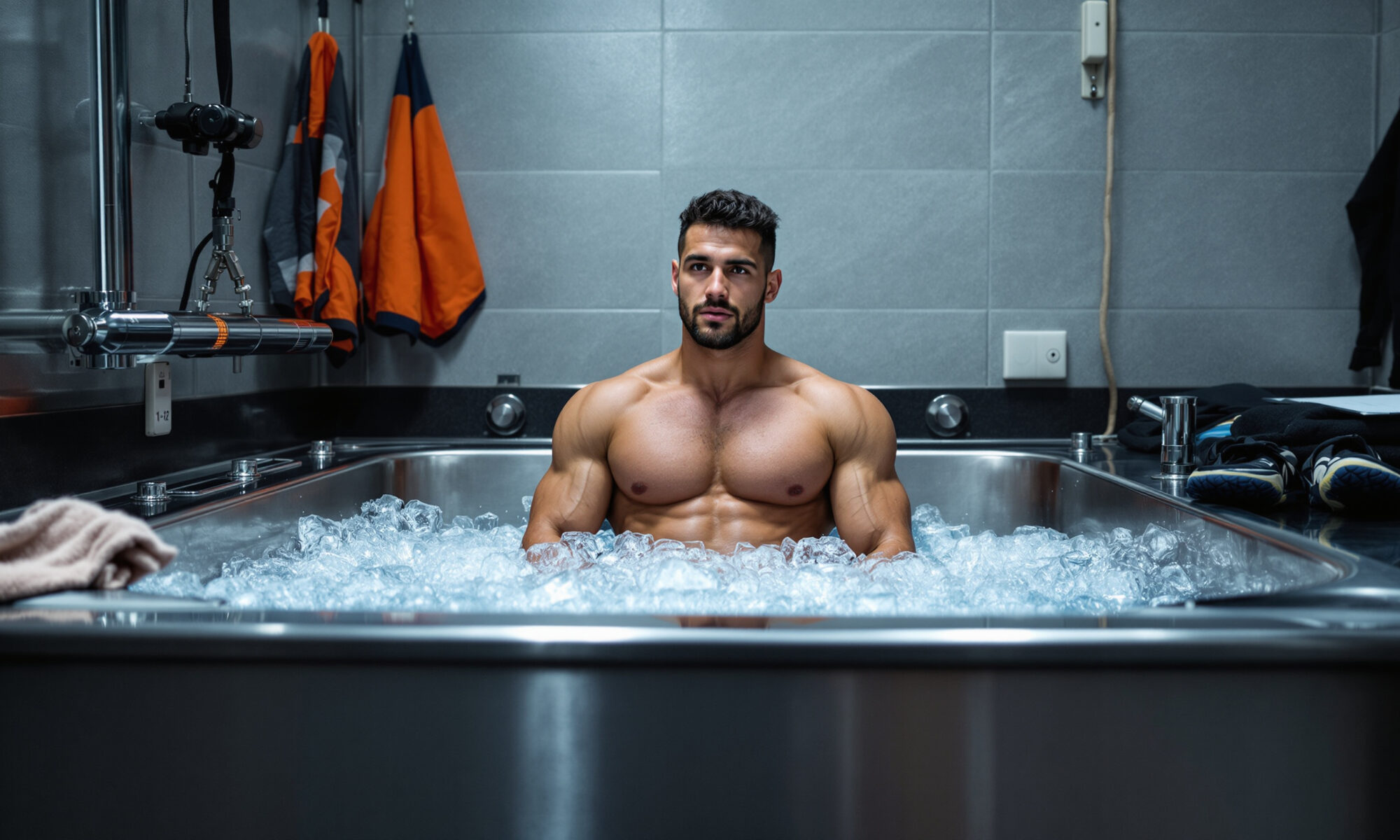
Cold plunge benefits science is a lot less magical than social media makes it sound. The research supports one main use: you may feel less sore and more recovered, especially after hard endurance work or tournament-style schedules. It does not reliably make you stronger, leaner, or more resilient on its own. And if you use cold water immersion right after lifting, some studies suggest it can reduce muscle-growth signaling and long-term hypertrophy.
What cold exposure seems to do well
The strongest case for a cold plunge is perceived recovery. Athletes often report less soreness, less leg heaviness, and a better sense that they can train again soon after cold water immersion. That matters in real sport, because recovery is partly physiology and partly your willingness to hit the next session with quality.
Research over the past decade generally finds small-to-moderate benefits for delayed-onset muscle soreness and recovery of subjective fatigue, especially when cold water immersion is used after repeated high-intensity efforts, endurance competition, or congested schedules. That’s useful, but it’s narrower than the online hype. Feeling better faster is not the same as adapting better long term.
If you track recovery with devices, keep your skepticism. Readings can move around for reasons that have nothing to do with tissue repair, which is why our breakdown of what wearables get right and wrong about recovery scores is relevant here. A cold plunge can change how recovered you feel without proving that your training adaptation improved.
Where cold plunge benefits science gets overstated
The biggest myth is that cold plunges are a universal recovery upgrade. They aren’t. A 2015 study by Roberts and colleagues found that regular post-exercise cold water immersion after strength training attenuated gains in muscle mass and strength-related adaptations compared with active recovery. Mechanistic work around mTOR signaling, satellite cells, inflammation, and blood flow gives that result some biological plausibility.
That doesn’t mean one ice bath ruins your gains. It means routine cold exposure immediately after hypertrophy-focused lifting is a questionable default if your goal is to add muscle. Honestly, this only matters if you’re already training hard and sleeping enough, but for lifters who are, timing becomes the whole story.
Another overclaim is inflammation. Fitness culture often treats all inflammation as bad. Training adaptation depends on some inflammatory signaling. Blunting it too aggressively, too often, right after lifting may be one reason cold water immersion can interfere with hypertrophy.
Timing is the real lever
If you remember one thing, make it this: use cold when the priority is being ready again soon, not when the priority is maximizing the adaptation from the session you just finished. That’s the transferable principle from athlete settings to normal life.
For example, a soccer player in a tournament, a runner with back-to-back hard days, or someone training for a first race while balancing work may value next-day readiness more than squeezing every bit of growth signaling out of one session. If that sounds like you, the logic behind cold exposure is stronger. The same tradeoff shows up in endurance planning and recovery management, which is why pieces like how to train for your first 10K without losing strength and our guide to Zone 2 cardio and fatigue control connect well with this topic.
- After hypertrophy or strength sessions: skip immediate cold water immersion for at least 4 to 6 hours, and many lifters will do best saving it for non-lifting days.
- After matches, tournaments, long runs, or repeated sprint work: a cold plunge right after can make practical sense if performance within 24 hours matters.
- For general wellness: treat it as an optional stressor, not a required daily ritual.
- If you have cardiovascular disease, uncontrolled hypertension, arrhythmia history, or you get chest pain, dizziness, or severe shortness of breath with cold exposure, talk to a qualified clinician before trying it.
That last point gets ignored because it ruins the heroic vibe. Sudden cold immersion sharply activates the sympathetic nervous system and the cold-shock response. For healthy people, that can be tolerable. For higher-risk people, it may not be smart.
A numbers-based comparison
Most generic articles stop at “it depends.” That isn’t good enough. Here is the practical comparison the research supports best.
| Goal | Typical protocol used in studies | What the evidence supports | Best timing | My practical take |
|---|---|---|---|---|
| Reduce soreness after hard conditioning | 10-15°C for 10-15 minutes | Small-to-moderate improvement in perceived soreness and readiness | 0-60 minutes post-session | Reasonable if you need to perform again within 24 hours |
| Maximize hypertrophy after lifting | 10-15°C for 10-15 minutes | 2015 strength-training research suggests repeated immediate use can blunt adaptation | 4-6+ hours later, or separate day | Don’t make it a post-leg-day habit |
| Endurance stage racing or tournament recovery | 10-15°C for 5-15 minutes | Best case for cold water immersion in applied sport settings | Immediately after competition | More useful here than in bodybuilding |
| Mood or alertness | 10-15°C for 1-5 minutes | Mainly short-term subjective effect; limited outcome data | Morning or away from key lifting sessions | Fine as a ritual, but the evidence just isn’t there for big training benefits |
| Whole-body health or longevity claims | Cold shower or plunge protocols differ widely | Human outcome evidence is limited and weaker than social media suggests | No clear best window | Don’t confuse a hard thing with a proven thing |
What the research shows versus what I’d do in practice
What the research shows: cold water immersion can improve subjective recovery and soreness, especially after endurance-type work or dense competition schedules. It may slightly help preserve performance in the short term. It is less convincing for long-term strength and muscle gain, and regular immediate use after resistance training may interfere with those goals.
What I’d do in practice: if you’re a lifter chasing size and strength, keep the cold plunge away from your main lifting sessions. Put it on rest days, after conditioning blocks, or later in the day when there is a long gap after training. If you’re an endurance athlete, field-sport athlete, or just had a brutal weekend of work plus training, use it strategically when next-session quality matters more than perfect adaptation from the last session.
There is also an overlooked edge case. Some people use cold exposure as a badge of discipline while under-sleeping and under-eating. That’s backwards. If your recovery basics are poor, a plunge is cosmetic. Start with food, sleep, and sensible load management. Our pieces on what to eat before a morning workout when you have no appetite and what heart rate variability really tells you about recovery will do more for most readers than another tub of cold water.
Who should use it, and who should probably skip it
Cold plunges make the most sense for athletes in-season, competitors with repeated efforts in a short window, and recreational trainees who are using them sparingly to manage soreness. They also fit people who simply enjoy them and can keep them from interfering with higher-priority work.
They make less sense as an everyday post-lift ritual for bodybuilders, powerlifters in hypertrophy blocks, or anyone who thinks discomfort automatically equals adaptation. It doesn’t. Hard things can be memorable without being productive.
And if you hate cold exposure, that’s a clue too. Recovery methods only work when you can apply them consistently without adding stress or stealing time from fundamentals like training quality, mobility, food prep, and sleep.
FAQ
Do cold plunges actually help muscle recovery?
They can help perceived recovery and soreness, especially after hard conditioning or repeated events close together. The evidence is stronger for how you feel in the next 24 hours than for better long-term adaptation.
Can cold plunges hurt muscle growth?
They can if you use them immediately after lifting on a regular basis. A 2015 resistance-training study found blunted hypertrophy-related adaptations with post-exercise cold water immersion compared with active recovery.
How cold and how long should a cold plunge be?
Common research protocols sit around 10 to 15°C for roughly 5 to 15 minutes. Colder or longer is not automatically better, and extreme exposure just raises discomfort and risk.
Is a cold shower as good as a cold plunge?
Probably not for matching whole-body immersion studies, because the dose is usually lower and less uniform. Still, a cold shower may give some short-term alertness and is easier to tolerate for many people.
Should you cold plunge after cardio but not after weights?
That’s the simplest practical rule for many trainees. After endurance or team-sport work, it can help you feel ready again sooner; after hypertrophy-focused lifting, delaying it is usually the smarter call.