Farmers carry benefits are real, but the evidence is more indirect than many social posts admit. If you want one exercise that trains grip, upper-back tension, trunk stiffness, gait under load, and basic work capacity at once, the farmer’s carry is hard to beat. What research clearly supports is grip strength, load carriage, and general strength work. What it doesn’t yet support is every oversized claim made specifically about this lift.
Why the farmer’s carry punches above its weight
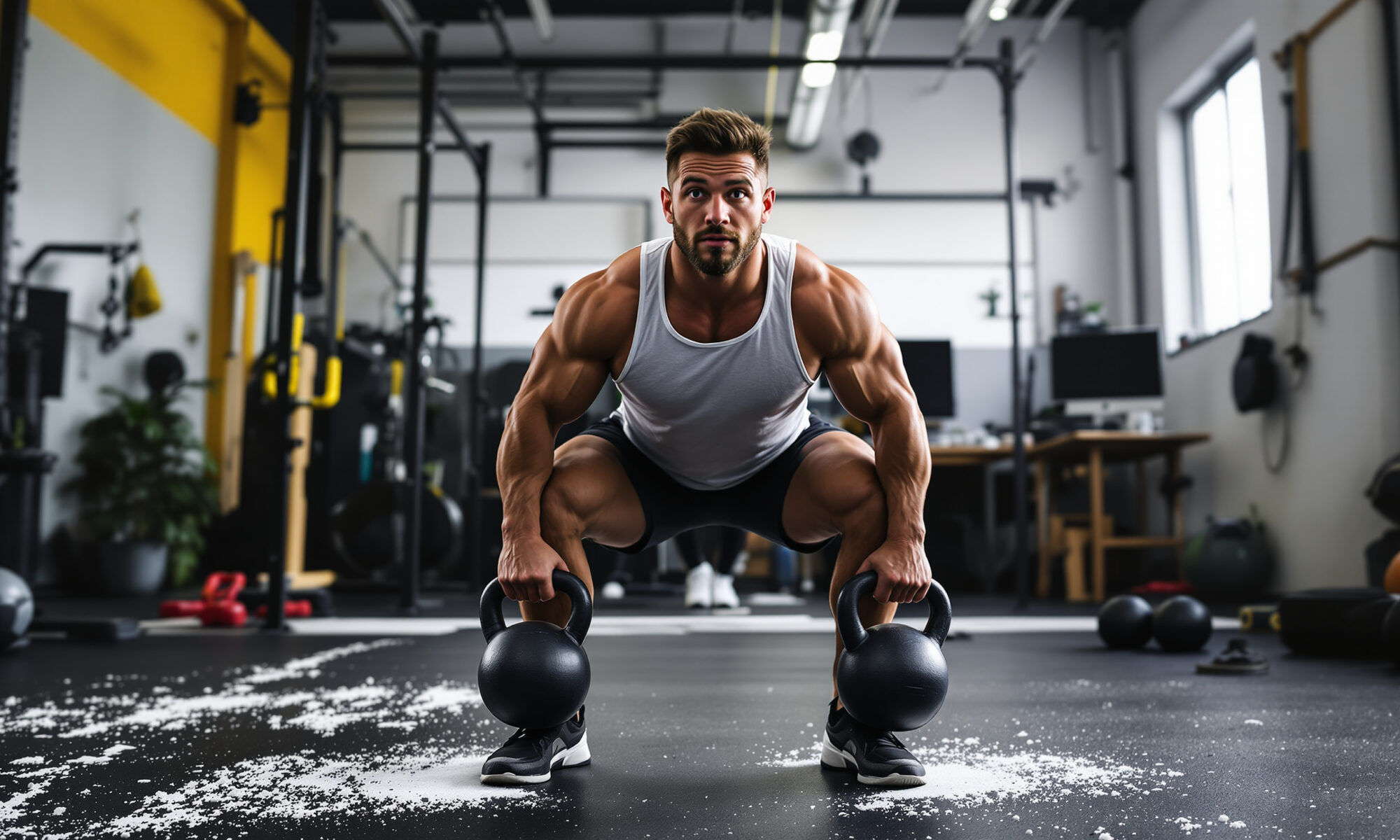
The movement is simple: pick up two implements, stand tall, and walk. In practice, that means your hands, forearms, lats, traps, obliques, spinal erectors, glutes, and feet all have to cooperate while you breathe and keep position.
That matters because most gym lifts are stationary. Carries force you to stabilize while moving, which is closer to real life and many sports. If your training is full of presses, rows, squats, and deadlifts but no loaded locomotion, you probably have a gap.
There’s also a compliance advantage. You don’t need a long learning curve, and you can load the pattern with dumbbells, kettlebells, trap-bar handles, farmer’s walk implements, or even heavy grocery bags at home.
What research actually says about farmers carry benefits
Here’s the honest version. High-quality trials isolating the farmer’s carry are scarce as of 2026. Most of the stronger evidence comes from two places: epidemiology on handgrip strength and biomechanics research on load carriage.
A 2018 systematic review and meta-analysis covering roughly 2 million people found higher muscular strength was linked to about a 31% lower risk of all-cause mortality. Grip strength is one of the most common strength measures in that literature, and a 2021 umbrella review rated the links between stronger handgrip and lower all-cause mortality, lower cardiovascular mortality, and lower disability risk as highly suggestive. That does not prove farmer’s carries extend your life. It does support the idea that building and maintaining meaningful grip strength is a good bet.
Older work points the same way. A 2010 systematic review found objective physical capability measures, including grip strength and walking speed, predicted mortality in community-dwelling adults. And a 2003 review by Rantanen summarized prospective findings showing men in the lowest third of grip strength had roughly 2 to 3 times the later disability risk of those in the highest third.
On movement mechanics, a 2011 Gait & Posture paper found external load carriage changes posture and gait strategy, with greater trunk inclination and increased hip and knee flexion while balance demands rise. That’s relevant because the farmer’s carry is exactly that: walking while resisting load-induced drift.
So the research-backed claim is modest but useful. Carries train qualities that matter, especially grip and loaded walking control. The flashy claim that they uniquely fix posture, cure back pain, or replace your entire core program is not established.
A numbers-based comparison: how to program for different outcomes
Coaching practice is much clearer than the research here. Across 2020 to 2023 strength and conditioning sources, common programming falls into a few predictable buckets: heavier and shorter for maximal strength, moderate and longer for conditioning, and single-arm versions for anti-lateral-flexion work.
| Goal | Load style | Set length | Sets | Rest | Best variation |
|---|---|---|---|---|---|
| Max grip and whole-body tension | Heavy, near-challenging by 20-30 m | 20-30 m or 20-30 s | 3-5 | 90-180 s | Standard farmer’s carry |
| Strength-endurance | Moderate, sustainable with clean posture | 30-50 m or 30-45 s | 3-6 | 60-120 s | Standard farmer’s carry |
| Conditioning | Moderate-light, breathing becomes limiting | 40-60 s | 4-8 | 45-90 s | Dumbbell or kettlebell carry |
| Anti-side-bend and trunk control | Moderate-heavy, one side loaded | 20-40 m per side | 2-4 per side | 45-90 s | Suitcase carry |
That comparison is more useful than pretending there’s one perfect carry prescription. Short heavy trips usually build the best grip and positional strength. Longer sets teach you to stay organized when breathing gets messy.
How I’d program it in the real world
What the research shows: loaded walking changes mechanics, challenges balance, and grip strength tracks with better long-term health outcomes. What I’d do in practice: slot carries 1 to 3 times per week, usually near the end of a strength session, and progress one variable at a time.
- Start with 3 sets of 20 to 30 meters using loads you can carry with tall posture and no wobbling.
- When all sets look clean for two sessions, add 5 to 10% load or 5 to 10 meters.
- Use heavy short carries after lower-body strength work, or moderate timed carries at the end for conditioning.
- Add suitcase carries if you collapse sideways, rotate excessively, or want more trunk demand with less total load.
A simple template for a lifter training four days per week could look like this: Day 1, 4 x 25 m heavy farmer’s carries after deadlifts; Day 3, 3 x 40 seconds suitcase carries per side after presses. That’s enough to drive adaptation without turning the exercise into a fatigue circus.
If your week is already packed, carries fit well into short sessions. They’re one of the better choices for people building a routine around busy schedules, which is also why our guide to building a fitness routine when you have a sedentary job pairs well with this kind of low-complexity strength work.
Technique that matters, and mistakes that matter more
The cue set is short. Pick the weights up like a deadlift, lock your ribs over your pelvis, keep your neck neutral, and take deliberate steps. Don’t rush. Fast sloppy carries usually become a grip test plus a low-back sway.
The common mistake is loading for ego before you can own the walk. If the bells bang your thighs, your shoulders round forward, or you zig-zag like you’re carrying two angry suitcases through an airport, the load is too high for the goal.
Single-arm work deserves more attention than it gets. Suitcase carries are excellent when you want trunk stiffness and frontal-plane control without the same absolute load as bilateral carries. For runners especially, that can be a useful complement to the movement quality work covered in these mobility drills for runners who want fewer injuries.
The myth worth killing: farmer’s carries are not “just grip work”
This is the lazy take. Yes, grip is often the limiting factor, and that’s one reason the lift is valuable. But the 2011 load-carriage evidence shows walking under load changes posture and lower-body strategy, which means your trunk, hips, and gait mechanics are involved whether you notice them or not.
Honestly, calling carries “just forearms” usually comes from people who either go too light or never use enough distance to expose positional leaks. A hard set tells you a lot about your bracing, breathing, foot pressure, and shoulder organization.
That said, don’t oversell the posture angle. A May 2026 open-access IJFMR paper suggested carry exercises may activate trunk stabilizers and reduce forward-head posture, but that’s a single paper, not settled consensus. Treat it as an interesting signal, not a finished verdict.
Who benefits most, and who should be cautious
Beginners benefit because the exercise is teachable and self-limiting. Intermediates benefit because carries expose weak links that bilateral barbell work can hide. Older adults can benefit too, especially since grip and physical capability are tied to long-term function, though loading should be conservative and technique closely watched. Our coverage of strength training foundations for seniors and practical strength work for older adults gives the broader context.
There’s also carryover for field and court athletes. Loaded walking won’t replace sprinting, jumping, or sport practice, but it can support trunk stiffness and general work capacity in the same functional-power bucket discussed in our piece on Ilona Maher’s strength approach and functional power.
Be cautious if you have active hand, shoulder, or low-back pain, balance limitations, or uncontrolled blood pressure. In those cases, it’s smart to get a qualified clinician or coach to modify the load, implement choice, and set length rather than forcing the standard version.
FAQ
Are farmer’s carries good for building muscle?
They can help build traps, forearms, upper back, and some trunk musculature, but they’re usually better as a complement than a primary hypertrophy tool. For pure muscle gain, presses, rows, squats, hinges, and dedicated arm work are easier to dose precisely.
How heavy should a farmer’s carry be?
Heavy enough that 20 to 30 meters feels demanding but your posture stays clean is a good starting point. If you have to lean, shuffle, or cut the walk short because the bells are swinging you around, back off.
Do farmer’s carries improve posture?
They may help you practice better stacked position under load, and a 2026 paper suggested possible posture benefits. But the evidence is thin, so don’t treat carries as a standalone posture fix.
Are suitcase carries better than regular farmer’s carries?
Better for some goals, yes. Suitcase carries increase anti-lateral-flexion demand and often challenge the trunk more per kilogram loaded, while regular farmer’s carries usually let you use more total load and train grip harder.
How often should you do farmer’s carries?
For most lifters, 1 to 3 sessions per week is enough. More than that can beat up your grip and recovery, especially if you also deadlift, row hard, climb, or do manual work.