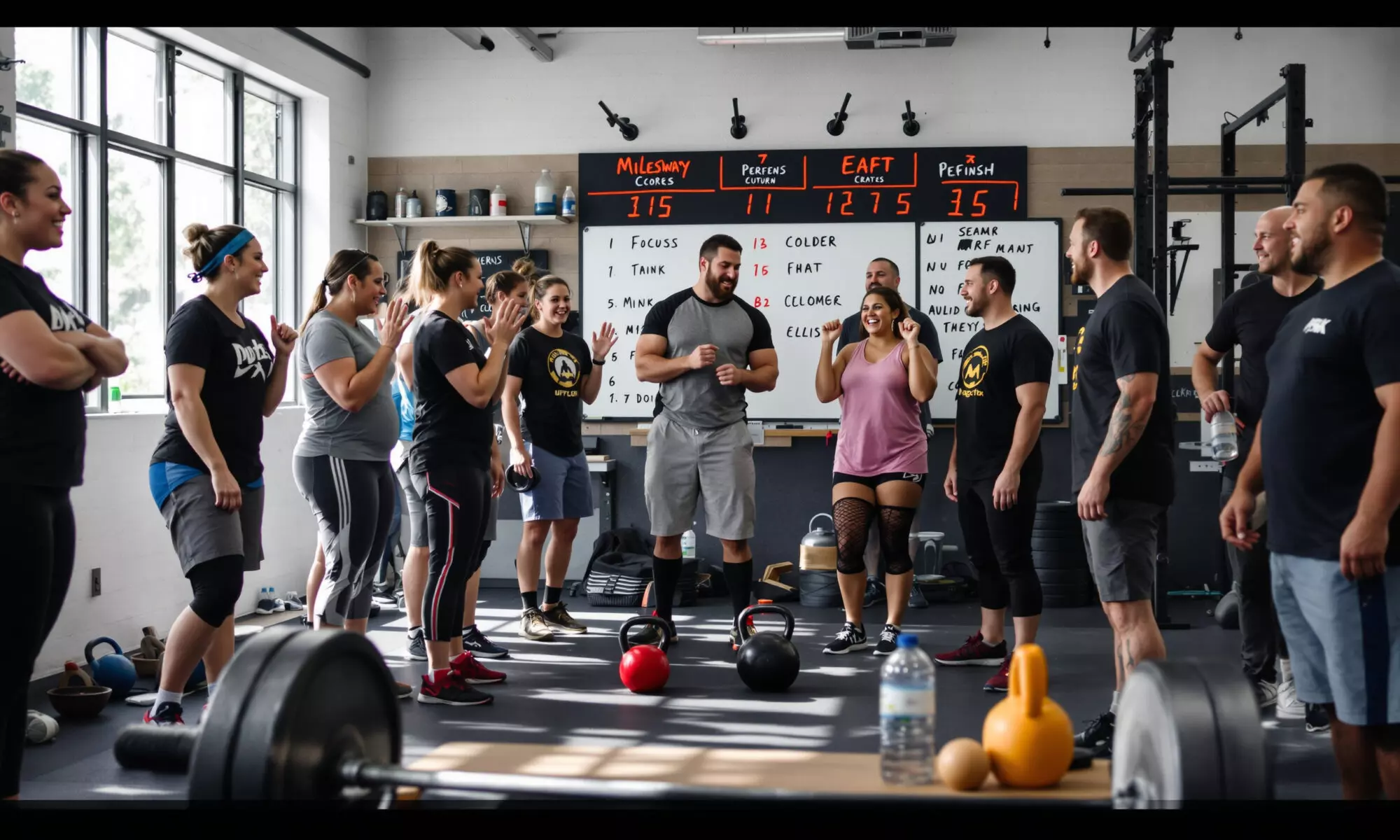
Fitness community events work best when they give people a clear reason to show up, a fair way to participate, and a concrete moment to mark progress. That could mean a gym challenge, a charity lift, a 5K, a PR board night, or a low-pressure beginner meetup. Done well, fitness community events improve adherence, social support, and enjoyment. Done badly, they become performative, cliquey, or so hard that only the fittest people come back.
The evidence is consistent on one point: social connection helps people stick with exercise. Behavioral and public-health research across the 2010s and 2020s has repeatedly linked group cohesion, accountability, and perceived support with better attendance and longer-term exercise adherence. The exact effect size changes by population and setting, but the direction rarely does.
That matters because celebrating progress is not fluff. It’s reinforcement. A first unassisted push-up, a 10-kilo deadlift PR, eight straight weeks of walking, or showing up after a rough month all deserve recognition. If your gym or group only celebrates elite outcomes, it will quietly train everyone else to stop caring.
Why fitness community events improve exercise consistency
Adherence is the whole game. Plenty of training plans work on paper. Far fewer survive work stress, family logistics, poor sleep, and the random chaos of adult life.
Community helps by adding three things solo training often lacks: social accountability, shared norms, and identity. Research on exercise behavior has found that people are more likely to continue when they feel expected, supported, and competent. In practice, that means a monthly challenge with team check-ins can outperform a technically better plan that nobody follows.
There is a catch. The same group dynamic that pulls people in can push others out. Events that center only leaderboard winners, body transformation photos, or all-out training to failure tend to exclude newer members and tired intermediates. If you want a smarter frame for hard sessions, our piece on whether training to failure helps long-term progress is worth reading before you turn every challenge into a sufferfest.
Fitness milestones worth celebrating beyond aesthetics
The usual mistake is obvious: turning every celebration into a weight-loss contest. That’s lazy programming, and the evidence around behavior change doesn’t support making scale weight the only marker of success.
Better categories are broader and more useful. Think attendance streaks, technique wins, strength PRs, first event completions, consistency during a stressful month, return-from-injury milestones, or improved work capacity at a given load. Cardio markers count too. For newer endurance-focused members, even a small rise in pace at the same heart rate is meaningful, and our guides to Zone 2 cardio for sustainable endurance and VO2 max basics explain why those gains matter.
Public weigh-ins and before-and-after contests are often less helpful than organizers expect. They select for the most extreme responders, can reward underfueling, and can be rough on people with a history of disordered eating or body-image issues. If your event includes weight-class sports, rapid cutting should be off the table unless qualified professionals are involved.
| Event format | Typical duration | Best metric | Good fit for | Main risk |
|---|---|---|---|---|
| Attendance challenge | 21-30 days | 8-16 check-ins | Beginners, busy adults | All-or-nothing dropout after missed days |
| Strength PR night | 1 day | 1RM or 3RM on squat, bench, deadlift | Intermediate lifters | Poor technique under hype |
| Charity 5K or ruck | 4-8 weeks prep plus event day | Finish time or completion | Mixed-fitness groups | Too much running too soon |
| Team conditioning block | 4-6 weeks | Total sessions, repeatable benchmark | Sports clubs, classes | Turning every session maximal |
| Technique clinic and showcase | 60-120 minutes | Skill checklist completion | Novices, returners | Too little coaching time per person |
How to organize effective fitness community events
You do not need elaborate staging or influencer-style promotion. You need structure. Good events make participation feel safe, progress feel visible, and standards feel fair.
- Pick one primary outcome for 2-6 weeks: attendance, distance, strength, or skill. Mixing all four usually confuses people.
- Create at least two entry points: beginner and experienced, or scaled and Rx. That keeps the event competitive without becoming exclusionary.
- Use one repeatable benchmark. A 500-meter row, a 1-kilometer walk, a 5RM trap-bar deadlift, or a technical checklist works better than vague effort points.
- Celebrate three kinds of wins publicly: best performance, biggest improvement, and best consistency. Those are different people more often than you’d think.
- Keep the prize small. A shirt, a framed certificate, or shared meal credit is enough. Big prizes distort behavior fast.
A practical model for a typical gym is straightforward. Run a four-week spring challenge with three scoring buckets: 1 point per attended session up to 12 points, 1 point for a baseline-to-finish benchmark improvement, and 1 community point for bringing a partner or helping at event setup. You reward consistency, progress, and contribution. That’s much healthier than crowning the naturally fittest member again.
If you want examples of how event-driven energy can shape a facility’s culture, see our coverage of fitness clubs built around social connection and wellness and the SunnyFit anniversary challenge and community celebration. Different scale, same principle: people come back when they feel part of something.
Fitness event budgets, logistics, and capacity planning
Most community events don’t fail because the workout was bad. They fail because nobody planned the boring stuff: capacity, timing, and cost. A simple event with 20-40 people and one coach can work very well. A messy event with 80 people, no stations, and no warm-up plan becomes a waiting line with dumbbells.
For a local gym in 2026, a realistic small-event budget is often around $75-300 for supplies if the space already exists. Think whiteboard markers, scorecards, paper wristbands, water, fruit, and maybe a few prizes. Printed event announcement cards can also help if you’re promoting a milestone night, charity session, or anniversary event to members who won’t notice another app notification.
The cost per attendee can stay low. At 30 people, even a $150 setup is $5 per person. That’s cheaper than most branded merch and usually more memorable.
Recovery planning matters too. If your event sits at the end of a hard training block, performance and mood may be lower than expected. That’s where wearable metrics can be interesting but not definitive. Our analysis of what recovery scores get right and wrong covers why you shouldn’t let an app decide whether a whole group is ready to perform.
Common mistakes that weaken fitness communities
The biggest myth is that hard equals meaningful. It doesn’t. Community events built only around pain tolerance are great at showcasing the people who were already bought in, and bad at retaining everyone else.
Another problem is over-measuring. If every event tracks body fat, calories burned, heart rate zones, average power, pace, and social shares, you’ve turned a celebration into an audit. Pick one or two metrics that reflect the goal.
Don’t overlook edge cases. New parents, older members, people returning after illness, and shift workers may be progressing without being available for your Saturday morning showcase. Good communities create alternate windows, remote check-ins, or parallel standards. The person who managed three weekly sessions while working nights may have earned more recognition than the person who added 2.5 kilos to a lift.
And yes, safety matters. Heavy lifting days should have defined attempts, spotters, and technical standards. Endurance events should include a gradual build, especially for deconditioned adults. If your group includes members with medical conditions, injury history, or recent underfueling, a quick check-in with a qualified clinician or sports dietitian before a demanding event is just common sense.
How to maintain momentum after a fitness event
A good event is not the point. It’s the hinge. The week after matters more than the photo wall.
Use the event to create the next action. That could be a new six-week lifting cycle, a walking group, a beginner barbell class, or a low-pressure run club. If people leave with no next step, the energy dies in 72 hours.
One useful tactic is to publish a recap with three categories: results, lessons, and next dates. Community grows when people can see themselves in the story, not just the podium. Local race culture and festival-style participation can do this well when they stay accessible, as seen in our coverage of the 2026 Donamatrix Day fitness festival.
In practice, if you coach or organize, celebrate adherence first, performance second, aesthetics a distant third. You will build a stronger training culture, and the performance gains usually follow anyway.
FAQ: fitness community events
What are fitness community events?
They are organized activities that bring people together around training, movement, or health goals. Common examples include gym challenges, charity runs, PR nights, walking groups, mobility clinics, and anniversary workouts.
Do fitness community events really improve motivation?
Often, yes. Exercise-adherence research has repeatedly found that social support, accountability, and group identity can improve consistency, although the effect depends on how welcoming and well-structured the event is.
How long should a gym challenge last?
For most general-population groups, 21-42 days is a good range. That’s long enough to build momentum, but short enough that people don’t mentally check out halfway through.
What should you reward in a fitness event?
Reward at least three things: best performance, biggest improvement, and most consistent participation. That keeps the event fairer and makes it more likely that newer members feel they belong.
Are body transformation contests a good idea?
Usually not as the main event. They can overemphasize weight change, encourage unsustainable dieting, and miss better markers like strength, attendance, skill, and energy levels.